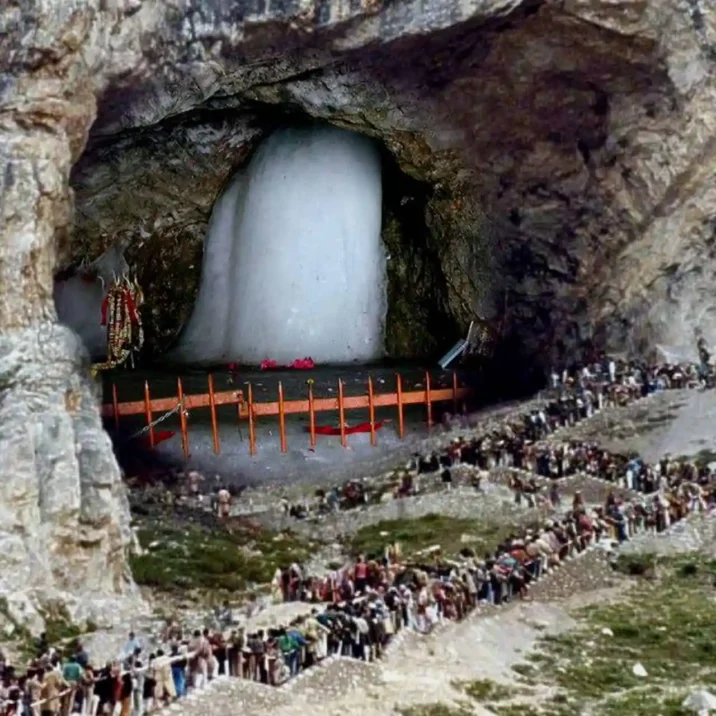
Amarnath Yatra 2026: Official Dates, No-Fly Zone Alert, Registration, Routes & the Complete Pilgrim’s Guide
By: JKL Travels – Kashmir Travels | June 2026
Updated 27 June 2026 | Fact-checked against official SASB notices, Government Order No. 321-HOME/2026, ANI, Daily Pioneer, Dynamite News & ground reports
The big news for 2026: The entire Amarnath Yatra corridor has been declared a No-Fly Zone. All helicopter services are officially suspended under Government Order No. 321-HOME of 2026. Every pilgrim — no exceptions — must reach the Holy Cave on foot, by pony, or by palki this year. Any website selling helicopter tickets for Amarnath 2026 is running a deliberate scam. Do not pay. Do not share your details. Report to cybercrime.gov.in.
Amarnath Yatra 2026 at a Glance
Before we go into detail, here is everything you need in one place — updated to 27 June 2026.
| Detail | Current Status |
|---|---|
| Yatra Start | 3 July 2026 |
| Yatra End | 28 August 2026 — Raksha Bandhan / Shravan Purnima |
| Total Duration | 57 days |
| Pratham Puja (First Worship) | 29 June 2026 — Jyeshtha Purnima |
| Pilgrims Registered (as of May 2026) | Over 3.5 lakh (5 lakh projected for full season) |
| Registration Fee | ₹150 offline · ₹220 online/group · ~₹1,510–₹1,550 NRI/foreign |
| Registration Portal | jksasb.nic.in (opened 15 April 2026) |
| Holy Cave Elevation | 3,888 m (12,756 ft) |
| Routes | Baltal (~14 km, steep) · Pahalgam (~46–48 km, gradual) |
| Helicopter Services | 🚫 Completely suspended — No-Fly Zone in force |
| How to Reach Cave | On foot · pony · palki (palanquin) · dandy ONLY |
| Nearest Airport | Srinagar International Airport (SXR) |
| Nearest Railway Station | Anantnag (Pahalgam route) · Srinagar (Baltal route) — both on USBRL |
| Train Service | Vande Bharat: Jammu Tawi → Srinagar (fully operational since April 2026) |
| Age Eligibility | 13 to 70 years |
| Daily Pilgrim Quota | 7,500 per route (Baltal and Pahalgam separately) |
| Security Strength | 1 lakh+ personnel · 670 CAPF companies — highest ever deployed |
| New Tech Deployed | Project Hawk Eye: 416 CCTV cameras · 34 facial recognition cameras · 5 drones |
When Is the Amarnath Yatra 2026?
Official Dates and Duration
The Shri Amarnathji Shrine Board (SASB) has confirmed that Amarnath Yatra 2026 begins on 3 July 2026 and concludes on 28 August 2026, spanning exactly 57 days. The yatra traditionally closes on Raksha Bandhan, the auspicious day the Chhari Mubarak — the holy mace of Lord Shiva — completes its ceremonial procession to the cave shrine.
Two days earlier, on 29 June 2026, the sacred season formally opens with the Pratham Puja (first worship) on Jyeshtha Purnima — attended by priests and officials but not the general public.
A quick fact-check: Several travel blogs have incorrectly published the 2026 yatra as lasting 62 days. That figure is wrong. The SASB-confirmed and officially notified duration is 57 days. Always verify at jksasb.nic.in.
When Is the Best Time to Go Within These 57 Days?
Not all weeks are equal. Here is how the season typically plays out:
Early July (3–20 July): The sweet spot. The ice Shivling is at its fullest and most magnificent, yet to be reduced by summer warmth. Skies are clearer in the mornings, crowds are large but manageable, and the trail conditions are at their best. Strongly recommended for first-timers.
Late July: The monsoon deepens. Rain is heavier and more unpredictable, trails can get muddier, and crowds build up significantly as Raksha Bandhan approaches.
August (1–28 August): Spiritually the most electric period — the buildup to Shravan Purnima and Raksha Bandhan draws enormous crowds. Physically more challenging due to rain and mud. Best for pilgrims who want to experience the peak devotional atmosphere.
No-Fly Zone 2026 — The Most Important Update Every Pilgrim Must Read
What the Official Order Says
Under Government Order No. 321-HOME of 2026, issued on 1 June 2026, the Jammu & Kashmir administration has officially declared all routes of the Shri Amarnath Ji Yatra — including both the Pahalgam and Baltal axes — a No-Fly Zone from 1 July 2026 until the conclusion of the yatra on 28 August 2026.
The SASB has published a formal public notice stating that all helicopter services for pilgrim travel are not available this year. This is the second consecutive year the ban has been enforced — it was first imposed in 2025 following the Pahalgam terror attack and Operation Sindoor.
Why Was the Helicopter Ban Imposed?
Security agencies and the J&K administration have cited four key reasons:
Security threat assessment: The Pahalgam terror attack of April 2025, which targeted tourists in the Baisaran Valley, triggered a comprehensive review of all civilian movement within the yatra corridor. Authorities adopted a strict, risk-averse approach that continues in 2026.
Counter-drone operations: Restricting all civilian air traffic allows security forces to identify and neutralise any unauthorised aerial activity — drones in particular have emerged as a serious cross-border threat.
Helipad crowd management: The concentration of large numbers of pilgrims at helipads created surveillance blind spots and emergency response complications.
Ongoing precaution: Despite no specific intelligence inputs pointing to a direct threat for 2026, the government has extended the No-Fly Zone as a precautionary measure to maintain operational control of the airspace.
What Exactly Is Suspended?
Every helipad that was previously operational is now closed for commercial use:
- Neelgrath Helipad (Baltal sector) — closed
- Panchtarni Helipad — closed
- Pahalgam Helipad — closed
The only exception is bona fide medical emergency evacuation, which requires special authorisation from the government on a case-by-case basis. This is categorically not a backdoor for commercial travel.
What Does This Mean for Your Planning?
If you were counting on a helicopter to skip the trek, you need to revise your plans completely. Every pilgrim, regardless of age (within the 13–70 limit), fitness, or VIP status, must reach the cave on foot, by pony, by palki, or by dandy. This makes route selection, physical preparation, and advance booking of pony/palki services the three most critical steps of your 2026 yatra planning.
⚠️ Scam Alert — Fake Helicopter Booking Websites
The SASB has issued a specific public warning: any website currently advertising or selling helicopter seats for Amarnath Yatra 2026 is operating a deliberate fraud. These sites are exploiting pilgrims who haven’t seen the official news.
If you come across one:
- Do not make any payment
- Do not enter your Aadhaar number, PAN, or banking details
- Report the website immediately at cybercrime.gov.in
Amarnath Yatra 2026 Registration — Complete Step-by-Step Guide
Who Can Register?
Registration is open to all Indian citizens and foreign nationals subject to the following conditions:
- Age: Between 13 and 70 years (strictly enforced, no exceptions)
- Pregnancy: Pregnant women are not permitted if the pregnancy has crossed 6 weeks
- Health: A Compulsory Health Certificate (CHC) issued by an SASB-authorised doctor is mandatory for every single pilgrim, including those who will use pony, palki, or dandy
Registration Fee — Clarified for 2026
Two different fee amounts have been reported online. Here is the clearest picture:
| Pilgrim Category | Fee |
|---|---|
| Indian — offline (bank branch) | ₹150 per person |
| Indian — online / group registration | ₹220 per person |
| NRI / Ex-India pilgrims | ~₹1,510–₹1,550 per person |
| Foreign nationals | ~₹1,550 per person |
Always verify the current fee on jksasb.nic.in before proceeding. The Shrine Board is the only authoritative source.
How to Register Online (Step-by-Step)
Registration is straightforward if you follow these steps in order:
Step 1: Visit jksasb.nic.in or download the official “Shri Amarnathji Yatra” mobile app.
Step 2: Create a new account using your mobile number and email address.
Step 3: Fill in your personal details exactly as they appear on your Aadhaar — name, date of birth, mobile number, and address.
Step 4: Upload the required documents: your Aadhaar card (or other valid government photo ID), a recent passport-size photograph, and your Compulsory Health Certificate.
Step 5: Select your route (Baltal or Pahalgam) and your preferred yatra date. Note the daily quota: 7,500 trekkers per route per day. Popular dates in early July fill up within hours.
Step 6: Pay the registration fee of ₹220 (online/group) through the secure payment gateway.
Step 7: Download and print your Yatra Permit. It shows your name, chosen route, travel date, and a QR code. Carry both a printed copy and a digital backup — it will be checked at multiple points.
How to Register Offline (Bank Branch)
Visit any of the 550+ designated bank branches across India. Confirmed participating banks include J&K Bank, State Bank of India, Punjab National Bank, YES Bank, ICICI Bank, and Axis Bank. The offline fee is ₹150 per person.
Carry your CHC, Aadhaar card, and four recent passport-size photographs. Aadhaar-based biometric eKYC is done in real time at the counter. The bank officer signs and stamps your printed Yatra Permit, which is your official travel pass.
Pro tip: Register as early as possible. Daily quotas for July dates are filling fast, and the closer you get to 3 July, the fewer slots remain.
The Compulsory Health Certificate (CHC) — What You Must Know
This is non-negotiable. Every single pilgrim — including those using pony, palki, or dandy — must carry a valid CHC.
For Amarnath Yatra 2026, the CHC must satisfy all of the following:
- Issued on or after 8 April 2026 — any certificate dated before this is invalid
- Signed by an SASB-authorised doctor (the state-wise list of authorised doctors and hospitals is available on jksasb.nic.in)
- Bear the applicant’s photograph, duly attested by the certifying doctor
Be honest with your doctor. The trek crosses 3,888 metres of altitude. Conditions that typically disqualify a pilgrim include uncontrolled hypertension, active cardiac disease, severe respiratory conditions, and epilepsy.
The Mandatory RFID Card
Every registered pilgrim must wear an RFID (Radio Frequency Identification) card around their neck throughout the entire yatra — from the moment they enter the trekking corridor to the moment they exit. It is used for real-time tracking, crowd management, and emergency response.
How to get it: Collect your RFID card from designated centres in Jammu or Srinagar after completing biometric verification. This must be done before you head to the base camp.
What happens without it: Access gates at Domail (Baltal route) and Chandanwari (Pahalgam route) will physically not allow entry without a valid RFID card. There are no exceptions.
New in 2026: All pony riders, porters, palki operators, and support staff now carry tamper-proof QR-code-based identity cards — the first time this system has been used in the yatra’s history. Scan the code if you want to verify your service provider’s credentials.
Baltal vs Pahalgam — Which Route Should You Take in 2026?
With no helicopter option this year, your route choice carries more weight than ever before. Here is an honest, detailed comparison.
| Factor | Baltal Route | Pahalgam Route |
|---|---|---|
| Distance (one-way) | ~14 km | ~46–48 km |
| Trek duration | 1–2 days | 3–5 days |
| Difficulty level | Strenuous — very steep | Moderate — gradual ascent |
| Pony service | ❌ Not available | ✅ Full service available |
| Palki/Dandy | Dandy (carried chair) only | Full palki service available |
| Overnight camps | Minimal | Sheshnag & Panchtarni |
| Scenery | Dramatic gorges | Glacial lakes, alpine meadows |
| Best suited for | Young, fit trekkers | Families, seniors, first-timers |
| Daily trekking quota | 7,500 pilgrims | 7,500 pilgrims |
| From Srinagar | ~100 km, ~3 hrs via NH1 | ~90 km, ~2.5–3 hrs |
| Nearest railway station | Srinagar (USBRL) | Anantnag (USBRL) |
The Pahalgam Route — The Traditional Pilgrimage Path
The Pahalgam route is the route generations of pilgrims have walked for centuries. It begins at Pahalgam (2,130 m) in Anantnag district, where a minibus covers the first 16 km to Chandanwari (2,896 m) — saving your legs for the actual climb. From Chandanwari, the path winds through some of the most extraordinary Himalayan scenery you will ever witness.
Complete Elevation Profile — Pahalgam Route
| Waypoint | Elevation | Trek Distance from Previous Point |
|---|---|---|
| Pahalgam — Start | 2,130 m | — (minibus to Chandanwari) |
| Chandanwari | 2,896 m | Minibus 16 km |
| Pissu Top | ~3,100 m | ~2 km — sharp climb |
| Sheshnag | 3,576 m | ~10 km — Overnight halt |
| Mahagunas Pass | 4,276 m | ~8 km — Highest point on the route |
| Panchtarni | 3,657 m | ~5 km — Last overnight halt |
| Sangam | ~3,800 m | ~3 km — Routes converge here |
| Holy Cave Shrine | 3,888 m | ~3 km — Destination |
A word about Mahagunas Pass: at 4,276 m, it stands higher than the cave itself and is the most physically demanding stretch on the route. The air is noticeably thinner here. Take it slow, rest often, and drink water.
Why the Pahalgam route is the smart choice in 2026: Full pony and palki support, multiple overnight halts for acclimatisation, and a gradual gradient that gives your body time to adjust. This is the route most doctors and experienced guides recommend — and with no helicopter fallback available this year, the logic is even stronger.
The Baltal Route — The Steep Express Path
Baltal earns its reputation for brevity, not ease. At roughly 14 km one-way from Baltal base camp (2,743 m), the path climbs through Domail, Barari Marg, and Sangam before reaching the cave. Most fit trekkers complete the darshan and return to Baltal the same day — but this demands a pre-dawn start (3–4 AM), a strong fitness base, and good weather.
Baltal Route Waypoints
| Waypoint | Distance from Baltal |
|---|---|
| Domail | ~2 km |
| Barari Marg | ~7 km |
| Sangam (routes merge) | ~11 km |
| Holy Cave Shrine | ~14 km |
Important for 2026: There is no regular pony service on the Baltal route. The only assisted transport is the dandy — a carried chair borne by four porters. On a 14 km steep ascent, this is both physically taxing for the porters and expensive. Do not attempt Baltal if you have any history of heart, lung, or knee problems.
Pony, Palki & Pithu — Your Essential Alternatives to the Helicopter
With helicopter services gone for 2026, these three services have become the lifeline for the vast majority of pilgrims who cannot complete the full trek on foot. Understanding how they work — and how to hire them correctly — is essential.
What Each Service Offers
Pony (Horse Riding): The most popular option on the Pahalgam route. Pilgrims ride ponies from Chandanwari through the entire route to the cave and back. The journey is broken into sectors, and government-notified rates apply per sector. Only available on the Pahalgam route — not on Baltal.
Palki (Palanquin / Doli): A chair suspended on two horizontal poles, carried by four to six porters. Ideal for elderly pilgrims, those with serious mobility limitations, and anyone whose medical condition allows the yatra but not active trekking. Available on the Pahalgam route. Weight limit is generally 80–90 kg — confirm with the operator at the counter.
Dandy (Carried Chair): Similar to a palki in concept, available on the Baltal route — the only assisted transport there. More limited in availability than the Pahalgam palki service.
Pithu (Porter): Carries your luggage, bags, water, and supplies throughout the trek. Some pithus also assist physically on difficult sections. Available on both routes. A good pithu is worth every rupee on the long Pahalgam route.
How to Hire — and How Not to Be Overcharged
The J&K Government officially notifies fixed rates for all pony, palki, dandy, and pithu services before each yatra season. The 2026 rate schedule is published on jksasb.nic.in and displayed prominently at all official hiring counters at the base camps.
The rules are simple:
- Always hire from SASB-registered official counters at Nunwan (Pahalgam) or Baltal base camps
- Check the government rate card displayed at the counter before agreeing to anything
- Never negotiate with roadside touts — they are typically unlicensed, uninsured, and their animals may not be registered
- Report any overcharging to the nearest SASB camp officer or J&K Police post immediately
- Your RFID card and documents must stay with you at all times — never hand them to a porter
On peak days — especially during Shravan Purnima week — ponies and pithus get booked by mid-morning. Start early. If you are travelling during a high-demand window, arrange pony/palki in advance through a registered tour operator.
How to Reach Amarnath — Getting to the Base Camps in 2026
By Train — The USBRL Changes Everything
This is genuinely transformational news for Amarnath pilgrims. The Udhampur–Srinagar–Baramulla Rail Link (USBRL), a 272 km mountain railway project decades in the making, became fully operational on 6 June 2025 when the final section was inaugurated. The Vande Bharat Express now connects Jammu Tawi directly to Srinagar — with the Jammu Tawi extension made operational in April 2026.
What used to be a 7-hour, weather-dependent road journey from Jammu to Srinagar is now a train ride of under 5 hours, all-weather, year-round. The route passes through the Banihal Tunnel, crosses the Chenab Rail Bridge (the world’s highest railway arch bridge, soaring 359 m above the river), and the Anji Khad Cable-Stayed Bridge (India’s first of its kind). Just the train journey itself is worth experiencing.
Key Railway Stations for Amarnath Pilgrims
| Station | Why It Matters | Approx. Distance to Base Camp |
|---|---|---|
| Anantnag (AINT) | Closest USBRL station to Pahalgam | ~35–40 km to Pahalgam · ~1 hr by taxi |
| Srinagar | Central hub; best for both routes | ~90 km to Pahalgam · ~100 km to Baltal |
| Banihal (BAHL) | Valley-side entry via Pir Panjal tunnel | ~120 km to Pahalgam by road |
| Katra (SVDK) | Vaishno Devi gateway; combo-yatra start | ~250+ km to base camps |
| Jammu Tawi (JAT) | Main national railhead; Vande Bharat origin | ~315 km Pahalgam · ~400 km Baltal |
For Pahalgam route: Take Vande Bharat to Anantnag — the closest station, just 35–40 km from Pahalgam by taxi (roughly 1 hour). This is the smartest option and significantly reduces road travel.
For Baltal route: Take Vande Bharat to Srinagar, then drive ~100 km to Baltal via the Srinagar–Leh NH1 (approximately 2.5–3 hours).
Vande Bharat fares (approximate): Chair Car ₹665–₹715 one-way; Executive Chair Car higher. Book on IRCTC well in advance — demand during the yatra season is extremely high. RPF and Government Railway Police provide security coverage on board for pilgrims.
Road Travel in 2026 — Time Restrictions You Must Know
J&K Police have implemented strict time-window rules for civilian road movement during the yatra:
- No civilian vehicle may leave Jammu for the Kashmir Valley before 11:30 AM
- No vehicles may cross the Banihal–Qazigund tunnel after 3:00 PM
- Similar restrictions apply on other key highway sections
These restrictions are strictly enforced. Plan your road journey around these windows. Bus convoys from Jammu to Pahalgam and Baltal operate within the permitted timings.
By Air
Fly into Srinagar International Airport (SXR), well-connected from Delhi, Mumbai, Bangalore, Hyderabad, Kolkata, and Chandigarh. From Srinagar airport: ~90 km to Pahalgam (~2.5–3 hours), ~100 km to Baltal (~2.5–3 hours via NH1).
Book flights at least 6–8 weeks in advance. July fares to Srinagar are among the highest of the year due to yatra demand.
Security Arrangements 2026 — The Most Protected Yatra in History
The scale and sophistication of security for Amarnath Yatra 2026 is genuinely unprecedented.
Scale of Deployment
Over 1 lakh security personnel are deployed across the entire yatra corridor — from Lakhanpur at the J&K border to the holy cave itself. The 670 CAPF companies approved by the Ministry of Home Affairs is the highest-ever number for any Amarnath Yatra — up from 580 companies in 2025. The deployment covers both trekking routes, base camps at Nunwan and Baltal, Yatri Niwas Jammu, the Jammu–Srinagar National Highway, and all key transit points.
The Indian Army secures strategic heights along both routes and areas around the cave shrine. For the first time, the Vikas Battalion — a newly raised Army unit of soldiers trained specifically in mountain warfare — has been deployed to secure the heights overlooking the Pahalgam route.
Project Hawk Eye — AI Surveillance on the Ground
Anantnag Police launched Project Hawk Eye as a comprehensive, technology-driven surveillance initiative for this yatra. Its key components:
- 416 CCTV cameras covering the entire yatra route from end to end
- 34 Facial Recognition System (FRS) cameras at 6 strategic locations, capable of identifying known militants, active terrorists, and Over Ground Workers (OGWs) in real time
- 5 drones deployed at key positions for aerial surveillance and rapid situational assessment
- Mock drills conducted across every zone and sector before the yatra commenced
- Anti-sabotage teams, bomb disposal squads, and dog squads completed comprehensive sanitisation sweeps at Nunwan and Bhagwati Nagar base camps
QR-Code Identity Cards for All Service Providers
In a first for the Amarnath Yatra, every service provider — pony riders, porters, palki operators, and support staff — carries a tamper-proof QR-code-based identity card in 2026. Security personnel and pilgrims can scan these codes to instantly verify credentials. This closes a vulnerability that has historically allowed unregistered or suspicious individuals to blend in as service workers.
High-Level Reviews
Union Home Minister Amit Shah personally chaired a security review meeting that included NSA Ajit Doval, J&K LG Manoj Sinha, Army Chief General Upendra Dwivedi, and CRPF DG GP Singh. J&K DGP Nalin Prabhat separately chaired a comprehensive review with the Army’s Victor Force, CRPF, BSF, and ITBP. The message from authorities is clear and unambiguous: “A robust and integrated security grid is essential to ensure the safe, secure, and smooth conduct of the annual pilgrimage.” SSP Anantnag Amod Ashok Nagpure has publicly assured pilgrims: “I urge the pilgrims to participate in the Yatra without any fear.”
Weather & What to Pack — Practical Guide for 2026
Understanding the Weather at 3,888 Metres
Even in peak summer, the Amarnath cave and its surrounding terrain behave like early winter:
| Condition | What to Expect |
|---|---|
| Daytime temperature at cave | 5°C–15°C · feels colder with wind chill |
| Night temperature at high camps | Close to or below 0°C |
| Monsoon rain | Sudden heavy showers at any hour |
| Snow | Possible at Mahagunas Pass (4,276 m) even in July |
| Fog and mist | Common in August; reduces visibility significantly |
What to Pack — Non-Negotiable Essentials
Clothing and Gear: Dress in layers — a thermal base layer, a fleece or woollen mid-layer, and a waterproof outer shell. Carry a rain poncho. Trekking shoes with strong ankle support and good grip are essential — not sneakers, not sandals. Pack a woollen cap, neck gaiter, thermal gloves, and at least two pairs of thick woollen socks. A trekking pole is particularly important in 2026 given the no-helicopter situation — it reduces knee strain significantly on both the ascent and descent.
Health and Safety: A personal first-aid kit (bandages, antiseptic, ORS sachets, blister pads). Any prescribed medications in sufficient quantity for the full trip. Diamox (Acetazolamide) for altitude sickness prevention — consult your doctor before taking it. A pulse oximeter is strongly recommended; oxygen saturation drops measurably above 3,500 m and a pulse oximeter tells you in real time how your body is coping. Sunscreen SPF 50+, UV-protection sunglasses, and lip balm.
Documents and Essentials: Yatra Permit (printed + digital), RFID card, CHC, Aadhaar, and 2–3 extra passport photos. A 1-litre reusable water bottle (single-use plastics are banned on the route). High-energy snacks — dry fruits, nuts, energy bars. A headlamp or torch with spare batteries. A power bank. Waterproof zip-lock pouches for all documents and electronics. A sleeping bag liner for the tented accommodation nights.
Altitude Sickness — The Biggest Risk in 2026
Without helicopter evacuation as a fallback, the consequences of ignoring altitude sickness are more serious this year. Acute Mountain Sickness (AMS) can affect even fit, healthy adults above 3,000 m. Know the symptoms:
- Persistent headache that doesn’t improve with water or rest
- Nausea or vomiting
- Dizziness and poor coordination
- Breathlessness even when resting
The golden rule: If symptoms appear, descend immediately. Do not push forward hoping it will pass at altitude. SASB medical camps with doctors, oxygen, and emergency evacuation capability are stationed at Chandanwari, Sheshnag, Panchtarni, and the cave. Locate the camp nearest to you at the start of each day’s trek.
Prevention: Acclimatise for at least one full day in Srinagar or Pahalgam before starting the trek. Drink 3–4 litres of water daily. Eat light, warm, regular meals. Avoid alcohol. Take slow, steady steps; rest every 20–30 minutes.
Amarnath Yatra 2026 — Six Detailed Itineraries (No-Fly Zone Adapted)
All itineraries below reflect the 2026 reality: no helicopters. Every route must be completed on foot, by pony, by palki, or by dandy.
Itinerary 1: 2-Day Baltal Trek for Fit Pilgrims
Best for solo trekkers or small groups aged 18–45 with prior trekking experience and no known health conditions.
Day 1: Arrive Srinagar by Vande Bharat or flight. Collect RFID card from a designated centre. Drive ~100 km to Baltal base camp (~2.5–3 hours via NH1). Check into tent camp. Arrange dandy for the next morning if needed. Light dinner. In bed by 9 PM.
Day 2: Wake at 3 AM. Trek begins by 4 AM — Baltal → Domail (2 km) → Barari Marg (7 km) → Sangam (11 km) → Holy Cave (14 km). Reach cave by 9–10 AM for darshan. Begin descent by 11 AM. Back at Baltal by 3–4 PM. Drive to Srinagar. Night departure or overnight in Srinagar.
Total trek: 28 km return. Fitness required: High. No pony. Dandy only if needed.
Itinerary 2: 4-Day Pahalgam Classic — The Traditional Pilgrimage
Best for first-timers, families, and anyone wanting the full, immersive traditional experience.
Day 1: Arrive Srinagar (Vande Bharat or flight). Rest and fully acclimatise. Collect RFID card. Arrange pony/palki if needed through a registered operator.
Day 2: Morning drive to Pahalgam (~90 km, ~3 hrs). Minibus to Chandanwari (16 km). Begin trek: Chandanwari → Sheshnag (~12 km, ~5–6 hours at a steady pace). Overnight at Sheshnag camp (3,576 m). Take a moment at the lake at dusk — the reflection of the surrounding peaks is something you will carry with you forever.
Day 3: The hardest day — Sheshnag → Mahagunas Pass (4,276 m) → Panchtarni. Allow 7–8 hours. Pace yourself on the pass. Rest at Panchtarni. Cave darshan in the afternoon if energy permits, or overnight at Panchtarni and visit early morning Day 4.
Day 4: Cave darshan (if not done Day 3). Descend to Chandanwari. Minibus to Pahalgam. Drive back to Srinagar. Rest and departure.
Full pony and palki support available. Best overall route for 2026.
Itinerary 3: 5-Day Pahalgam Comfort Trek — For Seniors and Families
Best for pilgrims aged 55–70, families with children, and anyone booking pony or palki services.
Day 1: Arrive Srinagar. Full rest. Book pony/palki through a registered tour operator or SASB counter.
Day 2: Drive to Pahalgam. Light afternoon walk around town. Early dinner and rest.
Day 3: Minibus to Chandanwari. Trek to Sheshnag on pony or at a gentle walking pace. Overnight at Sheshnag.
Day 4: Sheshnag → Mahagunas Pass (pony highly recommended here) → Panchtarni → Cave darshan → return to Panchtarni. Overnight.
Day 5: Gentle descent to Pahalgam. Drive to Srinagar. Depart or overnight in Srinagar.
Pace is relaxed throughout. Pony/palki recommended for Days 3–4. Ideal for older pilgrims who are medically cleared but not fit for sustained hard trekking.
Itinerary 4: 3-Day Baltal Weekend Trek
Best for young, physically fit pilgrims with a tight schedule.
Day 1: Morning flight or Vande Bharat to Srinagar. Collect RFID card. Drive straight to Baltal (~100 km). Overnight at Baltal camp.
Day 2: 3:30 AM start. Trek Baltal → Cave (14 km) → Baltal (14 km return). Full day on the mountain. Back at camp by 5–6 PM.
Day 3: Morning drive to Srinagar (~100 km). Afternoon flight back.
Tight schedule — pre-book tent accommodation at Baltal. Very early start mandatory both days of trek.
Itinerary 5: 6-Day Full Yatra + Kashmir Sightseeing
Best for first-time Kashmir visitors who want the pilgrimage and the Valley experience in one trip.
Day 1: Arrive Srinagar. Dal Lake shikara ride, Mughal Gardens, Shankaracharya Temple. Full acclimatisation day — don’t rush.
Day 2: Drive to Pahalgam (~90 km). Explore Baisaran meadows. Overnight at Pahalgam hotel.
Day 3: Chandanwari → Sheshnag (by pony or foot). Overnight camp.
Day 4: Sheshnag → Mahagunas Pass → Panchtarni → Cave darshan. Return to Panchtarni.
Day 5: Descent to Pahalgam. Drive to Srinagar. Half-day in Srinagar — Lal Chowk, local market, traditional Kashmiri dinner.
Day 6: Morning departure.
Best balance of pilgrimage and travel. Great for first-timers to both Kashmir and Amarnath.
Itinerary 6: 7-Day Vaishno Devi + Amarnath Combined Yatra
Best for pilgrims wanting both Vaishno Devi and Amarnath darshan in a single journey — now seamless via the USBRL.
Days 1–3: Travel to Katra by train (from any major Indian city). Complete Vaishno Devi darshan. Rest in Katra.
Day 4: Board Vande Bharat from Katra to Srinagar (~3.5–4 hours via USBRL). Settle in Srinagar. Rest and acclimatise.
Day 5: Drive to Pahalgam. Overnight. Collect pony/palki booking confirmation.
Day 6: Chandanwari → Sheshnag → Panchtarni → Cave darshan → return to Pahalgam.
Day 7: Drive back to Srinagar. Departure.
The USBRL makes this two-in-one yatra genuinely easy for the first time. Allow 7–10 days total for a comfortable, unhurried experience.
Accommodation Guide for Amarnath Yatra 2026
On the Route — Basic and Functional
| Location | Accommodation Type | Approx. Cost Per Night |
|---|---|---|
| Baltal Base Camp | Government tents, dharamshalas | ₹200–₹600 |
| Chandanwari | SASB tented camps | ₹200–₹500 |
| Sheshnag | NGO / SASB camps | Free – ₹600 |
| Panchtarni | SASB prefab huts and tents | ₹300–₹800 |
| Langars (entire route) | Free community meals and shelter | Free |
Bring a sleeping bag liner. Temperatures at Sheshnag and Panchtarni drop near freezing at night — do not underestimate the cold.
Near the Base Camps
Pahalgam: Wide choice of guesthouses, mid-range hotels, and a few higher-end properties. Rates: ₹1,500–₹6,000 per night. Book at least 3–4 weeks in advance — Pahalgam fills up entirely during July.
Sonmarg: The scenic gateway town closest to Baltal. Good base for Baltal-route pilgrims. Rates: ₹1,500–₹4,000 per night.
Srinagar — The Ideal Pre- and Post-Yatra Base
Srinagar (1,585 m) sits at an elevation that helps with early acclimatisation, is centrally located for both routes, and offers everything from Dal Lake houseboats to private villas and luxury hotels.
| Accommodation Type | Approx. Rate Per Night |
|---|---|
| Budget guesthouse | ₹800–₹2,000 |
| Mid-range hotel | ₹2,000–₹6,000 |
| Dal Lake houseboat | ₹3,000–₹12,000 |
| Luxury hotel or private villa | ₹5,000–₹25,000+ |
Complete Cost Breakdown for Amarnath Yatra 2026
A. Registration and Documentation
| Item | Cost |
|---|---|
| Yatra Permit — offline (bank branch) | ₹150 |
| Yatra Permit — online / group | ₹220 |
| Compulsory Health Certificate (CHC) | ₹300–₹1,500 (doctor’s fee varies by city) |
| RFID card | Included in registration |
B. Travel to Base Camps (Per Person)
| Item | Budget | Mid-Range | Premium |
|---|---|---|---|
| Flights to Srinagar (return) | ₹5,000–₹8,000 | ₹8,000–₹15,000 | ₹15,000–₹30,000 |
| Vande Bharat Jammu → Srinagar (one-way) | ₹665–₹715 (Chair Car) | ₹1,500+ (Executive) | — |
| Srinagar → Pahalgam | ₹400 (shared bus) | ₹1,200–₹1,500 (shared cab) | ₹2,500–₹4,000 (private) |
| Srinagar → Baltal | ₹500 (shared) | ₹1,500–₹2,000 | ₹3,000–₹5,000 (private) |
| Helicopter | 🚫 Banned | 🚫 Banned | 🚫 Banned |
C. On-Route Support Services (Pahalgam Route, Per Person, One-Way)
| Service | Approx. Cost |
|---|---|
| Pony — full Pahalgam route | ₹2,500–₹5,000 (govt-notified; verify at counter) |
| Pony — per sector | ₹500–₹1,500 |
| Palki — full route | ₹5,000–₹12,000 |
| Dandy — Baltal route | ₹4,000–₹8,000 |
| Pithu/Porter — per day | ₹500–₹1,500 |
Official government-notified rates for 2026 are on jksasb.nic.in and at hiring counters. Always check before paying.
D. Accommodation
| Type | Approx. Cost Per Night |
|---|---|
| On-route tents / dharamshalas | ₹200–₹800 |
| Langars | Free |
| Pahalgam / Sonmarg guesthouse | ₹1,500–₹4,000 |
| Mid-range Srinagar hotel | ₹2,000–₹6,000 |
| Dal Lake houseboat | ₹3,000–₹12,000 |
| Luxury hotel / private villa | ₹5,000–₹25,000+ |
E. Food on the Route
Free, warm, plentiful food is available throughout the yatra via community langars — dal, rice, khichdi, roti, chai — running 24 hours a day. Tea stalls and small shops along the routes charge ₹20–₹100 per item.
F. All-Inclusive Budget Summary (Per Person, Excluding Personal Shopping)
| Journey Type | Estimated Total Cost |
|---|---|
| Budget — Baltal, 3 days, Vande Bharat, tent camp | ₹8,000–₹18,000 |
| Mid-range — Pahalgam, 5 days, flight, mid-range hotel | ₹25,000–₹45,000 |
| Comfort — Pahalgam + pony/palki, 5 days, good hotel | ₹40,000–₹70,000 |
| Premium — Pahalgam + palki + luxury Srinagar stay, 7 days | ₹80,000–₹1,50,000+ |
All costs are estimates based on June 2026 pricing. Rates vary with booking time and demand.
The Spiritual Heart of Amarnath — Why Millions Make This Journey
The Amarnath cave is far more than a trekking milestone. It is one of the 51 Shakti Peethas and one of Hinduism’s most revered Shiva shrines. The Shiva Purana records this as the very spot where Lord Shiva revealed the Amar Katha — the secret of immortality — to Goddess Parvati.
The ice Shivling forms naturally each winter through the slow dripping of underground spring water, without any human hand. It waxes and wanes with the lunar cycle, reaching its absolute fullest on Shravan Purnima — the day the yatra concludes in 2026. Alongside the main Shivling, two smaller ice formations represent Goddess Parvati and Lord Ganesha.
There is an extraordinary legend that two white doves, said to have overheard the secret of immortality when Shiva whispered it to Parvati, live in the cave as immortal beings. Sighting them is considered among the most auspicious signs on the entire yatra. Pilgrims who have seen them describe the moment as the most overwhelming of the entire journey.
The Chhari Mubarak — the holy silver mace of Baba Barfani — is housed at the Dashnami Akhara in Srinagar. At the start of the season, it begins a ceremonial procession through various shrines across Kashmir, finally arriving at the cave on Raksha Bandhan, 28 August 2026 — the spiritual and emotional culmination of the 57-day pilgrimage.
You can read about the cave a hundred times. Nothing prepares you for stepping inside. The silence. The cold. The presence. Every difficult step on the way — every aching muscle, every thin breath of mountain air at 4,000 metres — makes complete sense in that moment.
Frequently Asked Questions — Amarnath Yatra 2026
General Questions
Q1. When does Amarnath Yatra 2026 start and end?
The Amarnath Yatra 2026 begins on 3 July 2026 and ends on 28 August 2026 — Raksha Bandhan / Shravan Purnima — spanning exactly 57 days. This is the official duration confirmed by the Shri Amarnathji Shrine Board (SASB).
Q2. How many days is the Amarnath Yatra 2026?
57 days. Several travel websites have incorrectly reported 62 days — that figure is wrong. Always verify on jksasb.nic.in.
Q3. How many pilgrims have registered for Amarnath Yatra 2026?
Over 3.5 lakh pilgrims had registered as of late May 2026. Authorities expect the total for the full 57-day season to exceed 5 lakh.
Q4. What is the height of the Amarnath cave?
The holy cave shrine is situated at 3,888 metres (12,756 feet) above sea level. The cave itself is approximately 40 metres tall.
Q5. What is the Chhari Mubarak?
The Chhari Mubarak is the holy silver mace of Lord Shiva (Baba Barfani), kept at the Dashnami Akhara in Srinagar. It undertakes a ceremonial procession to the cave shrine each yatra season, arriving on Raksha Bandhan — 28 August 2026 — to mark the spiritual close of the yatra.
No-Fly Zone & Helicopter Questions
Q6. Are helicopter services available for Amarnath Yatra 2026?
No. The entire yatra corridor has been declared a No-Fly Zone under Government Order No. 321-HOME of 2026 (issued 1 June 2026). All commercial helicopter services for pilgrim travel are completely suspended. The only aerial activity permitted is bona fide medical emergency evacuation with special government authorisation.
Q7. Why have helicopter services been banned in 2026?
The ban follows heightened security concerns after the 2025 Pahalgam terror attack and Operation Sindoor. The No-Fly Zone allows security agencies to control the airspace, counter drone-based threats, and prevent aerial surveillance or attacks by militant groups. This is the second consecutive year the ban has been enforced.
Q8. Is it true that websites are selling helicopter tickets for Amarnath 2026?
Yes — and those websites are scams. The SASB has specifically warned pilgrims that any website advertising or selling helicopter seats for Amarnath Yatra 2026 is engaged in deliberate fraud. Do not pay, and do not share your Aadhaar or bank details. Report such sites at cybercrime.gov.in.
Q9. How do I reach the Amarnath cave without a helicopter?
On foot, by pony (Pahalgam route only), by palki/doli (both routes), or by dandy (Baltal route). Hire all services from SASB-registered official counters at the base camps at government-notified rates.
Registration Questions
Q10. How do I register for Amarnath Yatra 2026?
Register online at jksasb.nic.in or the official SASB app, or offline at 550+ designated bank branches across India (J&K Bank, SBI, PNB, YES Bank, ICICI Bank, Axis Bank). You need a CHC issued on or after 8 April 2026, a valid Aadhaar, and 4 passport-size photographs.
Q11. What is the registration fee for Amarnath Yatra 2026?
₹150 per person for offline (bank) registration; ₹220 per person for online or group registration. NRI and foreign nationals pay approximately ₹1,510–₹1,550. Verify current fees at jksasb.nic.in.
Q12. What is the Compulsory Health Certificate and who needs it?
A CHC is a medical fitness certificate from an SASB-authorised doctor. It is mandatory for every single pilgrim — including those using pony, palki, or dandy. For 2026 it must be dated on or after 8 April 2026 and carry the applicant’s attested photograph. The state-wise list of authorised doctors is on jksasb.nic.in.
Q13. Is the RFID card mandatory?
Yes, without exception. Collect it from designated centres in Jammu or Srinagar after biometric verification. Access gates at Domail (Baltal) and Chandanwari (Pahalgam) will deny entry without it.
Route & Transport Questions
Q14. Which route is better in 2026 — Baltal or Pahalgam?
The Pahalgam route is strongly recommended in 2026, especially with no helicopter fallback. It has a gentler gradient, full pony and palki support, multiple overnight halts for acclimatisation, and is far more manageable for first-timers, families, and older pilgrims. Baltal suits only fit young trekkers — no pony service, dandies only, and a relentlessly steep ascent.
Q15. Are ponies available on the Baltal route?
No. Regular pony service is not available on the Baltal route. Dandies (carried chairs borne by porters) are the only assisted transport option on Baltal.
Q16. What is the nearest railway station to Amarnath in 2026?
Anantnag station (on the USBRL) is the closest to Pahalgam — approximately 35–40 km by road (~1 hour by taxi). For Baltal-route pilgrims, Srinagar station (also on USBRL) is the best option. The Vande Bharat Express now runs directly from Jammu Tawi to Srinagar, stopping at Anantnag — fully operational since April 2026.
Q17. What are the road restrictions for yatra travel in 2026?
No civilian vehicles may leave Jammu for the Valley before 11:30 AM, and no vehicles may cross the Banihal–Qazigund tunnel after 3:00 PM. These rules are strictly enforced. Plan all road travel within these permitted windows.
Safety & Logistics Questions
Q18. Is it safe to go for Amarnath Yatra 2026?
Yes. Over 1 lakh security personnel, 670 CAPF companies (highest ever), facial recognition cameras, Project Hawk Eye drone surveillance, and QR-code-verified service providers make this the most comprehensively secured yatra in history. SSP Anantnag has publicly urged pilgrims to come “without any fear.”
Q19. Can senior citizens do the yatra without a helicopter?
Yes, with careful planning. The age limit is 13–70 years. Senior pilgrims should choose the Pahalgam route with pony or palki support, acclimatise for at least two full days before starting, book pony/palki in advance through a registered operator, and carry a valid CHC. Do not attempt the Baltal route if you have any mobility, knee, heart, or breathing concerns.
Q20. Can I combine Vaishno Devi and Amarnath Yatra in one trip?
Absolutely — and the new USBRL makes it more convenient than ever. A recommended itinerary: complete Vaishno Devi darshan at Katra first, then board the Vande Bharat from Katra to Srinagar (approximately 3.5–4 hours via USBRL), rest and acclimatise in Srinagar, and then proceed to the Amarnath Yatra via Pahalgam. Allow 7–10 days total for a comfortable, unhurried twin-yatra experience.
Your Final Planning Checklist — Amarnath Yatra 2026
Before you pack your bags and head to Baba Barfani’s doorstep, run through this list. Every item here matters.
- ✅ Register early at jksasb.nic.in — 7,500 daily slots per route; July dates fill fast
- ✅ Get your CHC from an SASB-authorised doctor, dated on or after 8 April 2026
- ✅ Collect your RFID card from a designated centre in Jammu or Srinagar — not at the base camp
- ✅ Book Vande Bharat (IRCTC) or flight to Srinagar at least 6–8 weeks in advance
- ✅ Book accommodation in Srinagar, Pahalgam, or Sonmarg early — July sells out completely
- ✅ Arrange pony or palki through a registered operator well in advance, especially for peak July dates
- ✅ Plan road travel within J&K Police permitted windows — no departures from Jammu before 11:30 AM
- ✅ Pack in layers — waterproof, warm, lightweight; include a pulse oximeter
- ✅ Acclimatise for at least one full day in Srinagar or Pahalgam before starting the trek
- ✅ Carry printed AND digital copies of your permit, RFID card, CHC, and Aadhaar
- ✅ Do NOT book helicopter services from any website — all helicopters are banned in 2026; those sites are scams
- ✅ Start trekking by 3–4 AM on trek days to reach the cave and return before afternoon weather closes in
The Amarnath Yatra 2026 demands more of you than in previous years. No shortcuts. No flights. Just the ancient path beneath your feet, the thin mountain air in your lungs, and the quiet faith that has drawn pilgrims to this cave for a thousand years. Perhaps that is exactly as Baba Barfani intended it. Every difficult step is a surrender. Every breath at 4,000 metres is a prayer. The darshan at the end is not the reward — the entire journey is.
Har Har Mahadev. 🙏
All facts verified against: Official SASB website (jksasb.nic.in) · Government Order No. 321-HOME of 2026 (1 June 2026) · ANI News · Daily Pioneer · Dynamite News · Outlook India · Wikipedia USBRL · District Anantnag Service Rate Notification 2026 · Ground-level travel sources. Last updated: 27 June 2026.
