36 Hours in Srinagar: A First-Timer’s Guide to Kashmir’s Summer Capital
By: JKL Travels – Kashmir Travels | August 2026
Short on time but big on wanderlust? Here’s how to fall in love with Srinagar in a day and a half — one sunrise shikara ride, three Mughal gardens, a 600-year-old mosque, and a 36-course feast at a time.
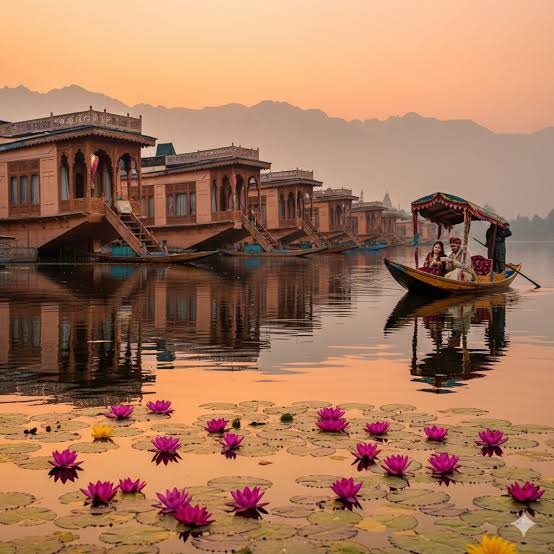
There’s a particular kind of magic that happens on Dal Lake just before sunrise. The water turns to glass. A lone shikara cuts through the mist, its paddle making almost no sound at all. Somewhere close by, a vendor is already stacking lotus stems and radishes onto a floating boat, setting up shop for the morning’s floating market — a ritual that has repeated itself here for centuries, long before “Kashmir” became a bucket-list word.
If you’re flying into Srinagar with only 36 hours before you head onward to Gulmarg, Pahalgam, or Sonamarg — or if Srinagar itself is your entire trip — this guide gives you a realistic, walkable, unhurried itinerary that hits the essentials without turning your short stay into a checklist sprint. We’ve cross-checked every historical claim, timing, and price against ground reports and official tourism sources, so what follows is accurate as well as inspiring.
Here’s exactly how to spend a day and a half in the City of Lakes.
Why Srinagar Deserves More Than a Layover
Most travelers treat Srinagar as a pit stop — a place to land, grab a houseboat photo, and rush off to the mountains. That’s a mistake. Srinagar isn’t just the gateway to Kashmir; it is Kashmir, distilled into one city. It has the water (Dal Lake and the Jhelum River), the faith (centuries-old Sufi shrines and mosques), the empire-building ambition of the Mughals (three staggering terraced gardens), and the food culture (a wazwan feast that takes a full day to prepare). Thirty-six hours is tight, but it’s enough to genuinely understand what makes this city special — provided you plan it right.
Best Time to Visit Srinagar
Before the itinerary, timing matters more than almost anything else in Kashmir.
- April to June: Gardens are in full bloom, the famous Tulip Garden is open, and temperatures sit in a comfortable range for walking tours. This is peak season, so book houseboats and guides early.
- September to November: The chinar trees turn a deep gold and crimson, Dal Lake is calmer with fewer tourists, and photography light is arguably at its best all year.
- December to February: Srinagar itself sees light snow, and it becomes the base for winter sports trips to nearby Gulmarg. Shikara rides and garden visits are still possible, just colder and shorter.
There’s no genuinely bad time to visit — only different versions of the same city.
Day 1, Evening: The Old City’s Living Heritage (5:00 PM – 8:00 PM)
Land, drop your bags, and head straight into Srinagar’s old quarter before the light fades. This is the side of the city most tour groups skip — and it’s the side that gives Srinagar its soul.
Jamia Masjid – Srinagar’s 600-Year-Old Heartbeat (5:00 PM)
Tucked into the bustling Nowhatta neighborhood, Jamia Masjid is one of the largest mosques in India and among the oldest surviving structures in the Valley — construction began under Sultan Sikandar Shah around 1400 AD. What makes it unforgettable isn’t scale alone; it’s the craftsmanship. The prayer hall and courtyard are ringed by 378 towering deodar-wood columns, each said to be carved from a single cedar trunk, supporting a distinctive pyramidal roof engineered specifically to shed heavy Himalayan snowfall. The mosque has survived multiple fires over the centuries and been lovingly rebuilt each time, which only adds to its sense of resilience. Step into the vast open courtyard at dusk, and the noise of downtown Srinagar simply falls away.
Tip: Dress modestly, remove your shoes before entering, and avoid visiting during Friday prayer hours unless you specifically want to witness the congregation.
Khanqah-e-Moula (Shah-e-Hamadan Shrine) – Kashmir’s First Sufi Sanctuary (7:00 PM)
A short walk along the Jhelum River brings you to Khanqah-e-Moula, also called the Shah-e-Hamadan shrine — widely regarded as the very first khanqah (Sufi hospice) built in the Kashmir Valley. It was commissioned in 1395 by Sultan Sikandar in memory of the Persian Sufi saint Mir Sayyid Ali Hamadani, whose teachings are credited with shaping Kashmir’s early Islamic identity. Like Jamia Masjid, the shrine has been rebuilt more than once after fire damage, but it has always been restored using the same technique: interlocking deodar wood beams assembled without a single nail, a traditional engineering method known locally as the Kashmiri “Taq” system. At twilight, with lanterns glowing against the intricate papier-mâché interiors and the Jhelum flowing quietly behind it, the shrine feels like it’s holding its breath.
Round off the evening with dinner at a local Boulevard Road café, and get an early night — Day 2 starts before sunrise.
Day 2, Morning: Dal Lake at Dawn and the Mughal Gardens (5:30 AM – 12:30 PM)
Sunrise Shikara Ride on Dal Lake (5:30 AM)
Set your alarm — this is the single most important booking of your trip. Arrive at one of the Boulevard Road ghats by 5:30 AM and hire a shikara (a flat-bottomed, hand-paddled wooden boat) for a one-to-two-hour glide through Dal Lake’s floating gardens, known locally as “Raad.” You’ll pass centuries-old houseboats, drift past the famous floating vegetable market where growers sell lotus stems, tomatoes, and greens straight off their boats between 5 and 7 AM, and watch the Zabarwan hills catch the first light. As of 2026, the Jammu & Kashmir Tourism Department’s official shikara tariff is roughly ₹700–800 per hour per boat (seating up to four people), so it’s genuinely affordable to share.
Tip: Negotiate or book through a verified operator before boarding to avoid inflated on-the-spot rates.
The Mughal Gardens: Nishat Bagh, Shalimar Bagh & Chashme Shahi (8:00 AM – 11:00 AM)
From the lake, head straight to Srinagar’s trio of terraced Mughal gardens, all built within a few years of each other in the early 1600s and all threaded along the same road:
- Shalimar Bagh – Built for Emperor Jahangir and his wife Nur Jahan, this is the grandest and most photographed of the three, with a central water channel running through terraced lawns lined with chinar trees.
- Nishat Bagh – The “Garden of Bliss,” built slightly later, offers the best uninterrupted views of Dal Lake and the mountains beyond, thanks to its steep, cascading terraces.
- Chashme Shahi – The smallest of the three, built around a natural spring believed to have medicinal properties, and easily paired with a stop at Pari Mahal (see Day 2 evening) since they sit on the same hillside.
All three are usually open from around 9 AM to 7 PM, and entry runs roughly ₹20–25 per person for Indian nationals — a genuinely small price for gardens that once entertained emperors.
Shankaracharya Hill (11:30 AM)
If your legs are up for a short climb, detour to Shankaracharya Hill, home to an ancient hilltop temple perched above the city. It’s a steep but brief walk (or a short drive partway up), rewarded with the single best panoramic view of Srinagar, Dal Lake, and the surrounding valley in one frame.
Day 2, Afternoon: Faith, Craft, and a Feast Fit for Royalty (1:00 PM – 5:00 PM)
Hazratbal Shrine (1:00 PM)
On Dal Lake’s northern shore sits Hazratbal, a striking white marble shrine and one of the most revered Islamic sites in Kashmir, believed to house a relic associated with the Prophet Muhammad. It’s an active place of worship rather than a museum piece, so visit respectfully — but the marble domes reflected in the lake water are worth the detour alone.
Lal Chowk and the Old City Markets (2:00 PM)
Head into Lal Chowk, Srinagar’s historic city square, for an hour of unhurried browsing. This is where you’ll find genuine Kashmiri pashmina shawls, hand-knotted carpets, walnut-wood carvings, and papier-mâché workshops where artisans still hand-paint each piece. Wander into the surrounding spice lanes near Bohri Kadal for saffron, dried fruits, and the kind of local energy that guidebooks can’t fully capture.
Tip: Bargain politely, and if buying pashmina or saffron, ask for a certificate of authenticity — Kashmir’s markets are wonderful, but counterfeit “pashmina” is common in tourist-heavy stretches.
The Wazwan Feast: Kashmir’s 36-Course Culinary Legacy (4:00 PM)
No visit to Srinagar is complete without wazwan — a traditional multi-course banquet that can run up to 36 dishes, though modern restaurant versions typically serve a curated 7–15 course selection. Almost entirely meat-based, the meal is prepared by hereditary master chefs called wazas and traditionally served on a shared copper platter called a trami. Signature dishes to look out for include Rogan Josh (a slow-cooked mutton curry colored with Kashmiri chili), Tabak Maaz (crisp-fried lamb ribs), Rista (spiced meatballs in red gravy), and Gushtaba (meatballs in a mellow yogurt gravy, traditionally the ceremonial final course). You can experience it at established Srinagar restaurants like Ahdoos, or arrange a private wazwan dinner aboard a Dal Lake houseboat for a more intimate setting.
Day 2, Evening: Sunset at Pari Mahal and a Lakeside Farewell (5:30 PM – 7:30 PM)
Pari Mahal – The Palace of Fairies (5:30 PM)
End your 36 hours at Pari Mahal, a seven-terraced garden-monument built in the mid-1600s by Prince Dara Shikoh, the eldest son of Emperor Shah Jahan, on the ruins of an older Buddhist monastery. Dara Shikoh reportedly used it as a residence, library, and even an informal observatory for teaching astronomy and astrology to his Sufi mentor’s students. Perched high on the Zabarwan mountain range, it offers arguably the single best sunset viewpoint in Srinagar — golden light spilling across Dal Lake with the city’s lights beginning to flicker on below.
Boulevard Road Farewell Walk (7:00 PM)
Close out your trip with an unhurried stroll along Boulevard Road, the 11-kilometer lakeside promenade that runs the length of Dal Lake. Grab a cup of kahwa (Kashmir’s traditional saffron and cardamom tea) from a roadside stall, watch the shikaras drift home for the night, and let the city have its final word before you head to the airport.
Tentative 36-Hour Srinagar Itinerary at a Glance
| Time | Experience | Duration | Approx. Cost (per person) |
|---|---|---|---|
| Day 1, 5:00 PM | Jamia Masjid | 45 min | Free entry |
| Day 1, 7:00 PM | Khanqah-e-Moula (Shah-e-Hamadan) | 45 min | Free entry |
| Day 1, 8:30 PM | Dinner, Boulevard Road | 1 hr | ₹400–800 |
| Day 2, 5:30 AM | Sunrise shikara ride, Dal Lake | 1–2 hrs | ₹700–800 (per boat, up to 4 people) |
| Day 2, 8:00 AM | Mughal Gardens (Shalimar, Nishat, Chashme Shahi) | 2.5–3 hrs | ₹20–25 per garden |
| Day 2, 11:30 AM | Shankaracharya Hill | 45 min | Nominal vehicle/entry fee |
| Day 2, 1:00 PM | Hazratbal Shrine | 30 min | Free entry |
| Day 2, 2:00 PM | Lal Chowk & Old City markets | 1.5 hrs | Shopping budget varies |
| Day 2, 4:00 PM | Wazwan feast | 1.5 hrs | ₹800–2,000+ |
| Day 2, 5:30 PM | Pari Mahal sunset | 1 hr | ₹20–25 |
| Day 2, 7:00 PM | Boulevard Road walk & kahwa | 30 min | ₹50–100 |
Estimated total cost for 36 hours (excluding stay/flights): roughly ₹2,500–₹5,000 per person, depending on shopping and dining choices. Add houseboat or hotel stay (from around ₹3,000/night upward) and local transport (auto-rickshaw ₹80–150, taxi ₹200–350 for short in-city hops) on top.
Practical Tips for a Smooth 36 Hours
- Book your houseboat or hotel in advance, especially in peak season (April–June), as lakeside stays fill up fast.
- Hire a local guide or trusted taxi driver for the day — Srinagar’s sights are spread out enough that a private vehicle saves significant time.
- Carry cash for shikara rides, garden entries, and small purchases; card acceptance is inconsistent outside major hotels.
- Dress modestly when visiting mosques and shrines, and always ask before photographing local vendors or worshippers.
- Check road and weather advisories before travel, since seasonal closures or heavy rain can occasionally affect onward routes to Gulmarg, Pahalgam, or Sonamarg.
Frequently Asked Questions
Is 36 hours enough to see Srinagar? Yes — 36 hours is enough to cover Srinagar’s essential highlights, including Dal Lake, the Mughal gardens, the Old City’s mosques and shrines, and a wazwan meal, provided you start early each day and don’t try to add too many extra stops.
What is the best time of day for a Dal Lake shikara ride? Early morning, between 5:30 AM and 7:00 AM, is best. You’ll get calm water, soft light, and a front-row seat to the floating vegetable market, which winds down by mid-morning.
How much does a shikara ride cost in Srinagar? As of 2026, the Jammu & Kashmir Tourism Department’s approved rate is approximately ₹700–800 per hour per shikara, which typically seats up to four passengers, making it inexpensive when shared.
What is wazwan, and do I need to book it in advance? Wazwan is Kashmir’s traditional multi-course feast, historically featuring up to 36 dishes, though restaurants usually serve a shorter curated version. It’s advisable to book ahead, especially if you want a private houseboat wazwan dinner, since preparation takes hours.
Is Srinagar safe for tourists? Srinagar’s tourist areas — Dal Lake, Boulevard Road, the Mughal gardens, and Lal Chowk — see heavy domestic and international footfall year-round and are well-patrolled. As with any destination, it’s sensible to check current travel advisories before your trip and stay updated on local conditions during your stay.
What should I pack for a short Srinagar trip? Layered clothing (even summer evenings can turn cool by the lake), comfortable walking shoes for the Old City’s uneven lanes, a modest outfit for shrine visits, and a lightweight jacket if traveling between October and March.
Can I combine this itinerary with a trip to Gulmarg or Pahalgam? Absolutely — Srinagar functions as the base for most Kashmir itineraries. This 36-hour plan works well as a bookend at the start or end of a longer Gulmarg, Sonamarg, or Pahalgam trip.
Planning your Kashmir trip? Start with Srinagar, give it the full 36 hours it deserves, and let the rest of the Valley unfold from there.
