Fake Saffron & Shilajit in Kashmir: Tourist Alert 2026 — How to Spot, Avoid & Buy Authentic
By: JKL Travels – Kashmir Travels | Aug 2026
You Paid for Kashmir’s Finest. You May Have Been Given Dye and Dust.
You just returned from one of the most beautiful places on earth. The mountains were real. The Dal Lake was real. The warmth you felt the moment you arrived — that was real too. But that little packet of “premium Kashmiri Kesar” you bought from the smiling vendor near Gulmarg? Or that dark, resinous shilajit the man outside the Mughal Gardens pressed into your hands, swearing it would change your life and sharpen your mind?
There is a very real chance that neither of them was what you were told.
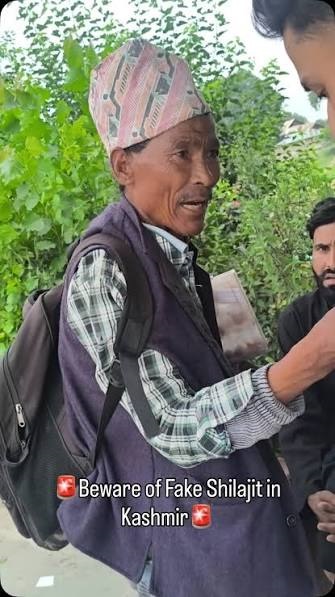
Across Kashmir’s most beloved tourist destinations — from the flower-lined shikaras of Srinagar’s Dal Lake to the rolling meadows of Pahalgam and the pine-kissed mountain paths of Sonamarg — a quiet but deeply damaging trade is thriving in plain sight. Mobile vendors, most of them non-local, are aggressively pitching counterfeit saffron and adulterated shilajit to visitors at prices so irresistibly attractive that they feel like once-in-a-lifetime deals. They are not deals. They are traps — elegant, well-rehearsed, and designed to exploit the one thing tourists naturally bring to Kashmir: trust.
This is your tourist alert. Read it before you shop. Share it with anyone you know who is about to visit the Valley.
The Price That Reveals the Lie
The single most important fact every visitor to Kashmir must burn into memory before setting foot in a market is this: real Kashmiri saffron cannot be cheap. It is physically, mathematically impossible for it to be cheap.
Here is why. Saffron — called Kesar or Kong in the local tongue — grows from the stigma of the Crocus sativus flower, a delicate, lilac-petalled bloom that appears for just a few weeks every October in the fields around Pampore, a town roughly 15 kilometres from Srinagar. Each flower produces exactly three hair-thin crimson threads. Those threads must be hand-plucked at the precise moment of bloom — before the sun climbs too high and wilts the petals — by farmers who have spent their lives learning the rhythm of this harvest. To produce a single kilogram of dried saffron, farmers must hand-pick approximately 75,000 individual flowers. That kilogram must then be dried with extraordinary care to preserve its coloring compounds, its fragrance, and its medicinal properties.
This is not a commodity. This is a centuries-old craft masquerading as a spice.
Genuine Kashmiri Mongra saffron — the finest, most prized grade — retails between ₹300 and ₹700 per gram from reputable sources, with wholesale prices to legitimate traders running ₹240 to ₹280 per gram. Even at the most accessible end of the authentic market, you will not find real Kashmiri Kesar for less than ₹250 per gram from a trusted, verifiable seller.
What are the roadside vendors hawking near tourist viewpoints, shikara docks, and garden entrances? ₹100 to ₹150 per gram. Sometimes less. For “the finest Kashmiri Kesar, straight from the farm.”
At ₹100 per gram, the arithmetic of real saffron collapses entirely. The labor alone — the dawn harvests, the hand-picking, the careful drying — makes that price a fiction. What actually fills those beautifully packaged little envelopes is a mixture of dyed corn silk, safflower petals, coconut filaments, and in some cases shredded paper or thin plastic threads sprayed with industrial colorant to mimic the deep crimson of real saffron strands. Some vendors go a step further, adding a thin coating of honey, oil, or sugar syrup to genuine but deeply inferior foreign saffron to make it look heavier, glossier, and more premium than it truly is — essentially selling you moisture and manipulation by weight.
Field testing of saffron samples collected from tourist-facing vendors across multiple Kashmiri tourist zones has found that nearly two out of every three packets presented as “authentic Kashmiri saffron” contain visible adulterants detectable without any laboratory equipment — just careful eyes and a glass of water. Two out of three. In a market built on the promise of the world’s finest spice.
The Science of the Scam: What Fake Saffron Is Actually Made Of
Open a packet of counterfeit saffron and you are not just opening something worthless. You may be opening something genuinely dangerous.
The most common adulterants used in fake saffron are safflower petals, dried marigold, turmeric, and dyed corn silk — all visually plausible substitutes for saffron threads when dyed the right shade of red. These are relatively harmless in themselves, but they deliver none of saffron’s active compounds: no crocin for color and antioxidant power, no picrocrocin for its characteristic bitter taste, no safranal for its unmistakable aroma. You are essentially cooking with decorative fiber.
But the more dangerous category of fake saffron uses hazardous synthetic dyes — including industrial colorants from the Sudan dye family, the same class of chemicals found in certain motor lubricants and leather treatments, and auramine-O, a synthetic dye classified as a possible human carcinogen by international health and toxicology bodies. These substances are not food-grade. They are not remotely close to food-grade. When you cook with dye-laced fake saffron, these chemicals dissolve directly into your food. They produce a golden hue that looks convincingly like the real thing — your biryani gleams, your kheer takes on a warm amber tone — but what you are actually consuming is an industrial compound that accumulates in the body with repeated use, potentially causing allergic reactions, digestive distress, and with prolonged exposure, far more serious harm.
Adulteration rates in Indian saffron retail markets, particularly in unregulated tourist-facing channels, are estimated by food fraud researchers to hover between 60 and 70 percent. That means in any given informal market or roadside stall in Kashmir, the odds are firmly stacked against you receiving the real thing — even if you ask carefully, even if the vendor swears on the name of the Valley.
The scam works because the packaging is convincing, the price is seductive, the setting is beautiful, and the seller knows that most tourists will be hundreds of kilometres away before they discover they were deceived.
How to Spot Fake Saffron in 60 Seconds: 5 Tests That Never Lie
You do not need a laboratory, a spectrometer, or a chemistry degree. You need a glass of room-temperature water, a piece of white paper, and about five minutes of patience. These five tests have been used by saffron farmers, traders, and quality inspectors for generations — and they work.
1. The Water Test — The Most Reliable of All
Drop three to four saffron threads into a glass of cold water and leave them undisturbed for ten to fifteen minutes. Do not stir. Just watch.
Real Kashmiri saffron releases color with the patience of something genuinely valuable. The water gradually takes on a deep, warm golden-yellow tone — the color of afternoon sunlight filtered through ancient glass. Crucially, the threads themselves remain red and intact, holding their color even after giving some away to the water. That is the behavior of crocin, the water-soluble pigment in authentic saffron, which releases slowly because it is bound within the natural structure of the thread.
Fake saffron bleeds. Within seconds — sometimes within a single moment of touching the water — it releases a rush of bright red or orange color. The water turns vivid and unnatural almost instantly, and the threads fade to a pale, washed-out husk. That is the behavior of an applied dye, a surface coating that has nothing to anchor it to the fiber underneath. If your water changes color in under thirty seconds, what you are holding is dyed material.
2. The Rub Test — For On-the-Spot Checking
Wet your fingertips slightly, take a single thread, and rub it firmly against a piece of white paper or white cloth.
Genuine saffron will leave a faint, slow-developing golden stain — the kind that deepens as you look at it, with an almost luminous yellow quality. The thread itself will remain mostly intact after rubbing, retaining much of its color.
Counterfeit saffron stains immediately and dramatically — a heavy red or orange smear that appears with almost no effort. The thread will often lose all of its color in a single rub, leaving behind a pale or colorless fiber. Real color is embedded in the structure of the strand. Applied dye sits on the surface, waiting to be rubbed off.
3. The Smell Test — The Nose Knows Before the Eyes Do
Bring the packet close and inhale before you buy anything. This takes ten seconds and costs nothing.
Authentic Kashmiri saffron carries a fragrance unlike anything else in the spice world — complex, layered, and slightly paradoxical. It is simultaneously earthy and floral, warm and metallic, with an almost medicinal depth underneath a hay-like sweetness. This aroma comes from safranal, a volatile compound that forms only during the drying process of real saffron and cannot be synthesized cheaply. The smell of genuine Kashmiri Kesar lingers on your fingertips long after you have handled it.
Fake saffron smells wrong in one of two distinct ways. Either it has no real smell at all — a flat, papery nothingness that tells you immediately there is no safranal present — or it smells aggressively sweet, almost like cheap candy or artificial fruit flavoring, which signals a surface spray or syrup coating added to simulate fragrance. If you open a packet and feel underwhelmed by its smell, or strangely reminded of a flavored drink, put it down and walk away.
4. The Taste Test — Bitterness Is a Badge of Authenticity
A single thread placed on the tongue tells an enormous story in just a few seconds.
Real saffron tastes faintly bitter, slightly metallic, with an earthy warmth that unfolds slowly. It is not a pleasant taste in the way sugar is pleasant — it is complex, astringent, the taste of something potent and alive. That bitterness is picrocrocin, one of saffron’s key active compounds, and its presence confirms what you are holding is genuine.
If the thread tastes sweet, or tastes of nothing, or has a vaguely chemical aftertaste — you are tasting adulteration. Sugar syrup coatings are among the most common techniques used to add artificial weight to inferior saffron, and they announce themselves unmistakably to an attentive palate. Sweetness in saffron is never a virtue. It is a warning.
5. The Price Test — No Equipment Required
This final test needs nothing but common sense and a working knowledge of arithmetic.
If a vendor is selling “pure Kashmiri Mongra saffron” for less than ₹300 per gram — and especially if they are offering it at ₹100 to ₹150 per gram at a roadside stall — it is not genuine saffron. It cannot be genuine saffron. The cost of producing, harvesting, drying, and legitimately selling even the most modest grade of authentic Kashmiri saffron makes that price structurally impossible. A deal that seems too good to be true is not a deal at all. It is a performance — and you are the audience.
Buy Real. Buy Safe. Buy from Home.
Kashmir Store brings you GI-certified, lab-tested Kashmiri Kesar sourced directly from the saffron fields of Pampore — the Saffron Capital of the World — and delivers it to your doorstep anywhere across India.
No roadside gamble. No chemical dyes. No middlemen taking liberties with your trust.
✅ 100% Authentic Kashmiri Mongra & Laccha Saffron ✅ GI Tag Certified (Tag No. 635) | ISO 3632 Grade I ✅ NABL Lab-Tested for Purity & Potency ✅ Sourced Directly from Pampore Farmers ✅ Pan-India Doorstep Delivery
🌿 Shop Authentic Kashmiri Saffron at Kashmir Store →
Real Kashmir, delivered to you. Because what you bring home should be as genuine as the Valley itself.
What Is Shilajit — And Why Tourists Are Its Easiest Targets
If saffron is Kashmir’s most celebrated spice, shilajit is its most mythologized natural remedy — and increasingly, one of the most shamelessly counterfeited products sold to visitors in the Valley’s tourist zones.
Shilajit is not a supplement invented by a modern wellness brand. It is a substance that the Himalayas themselves create, over centuries, through a process of extraordinary geological patience. As plant matter trapped between layers of rock decomposes under extreme pressure and altitude, it slowly transforms into a dark, resinous exudate that seeps from rock faces at high elevations — particularly above 3,000 metres. Rich in fulvic acid, humic acid, and over 80 trace minerals in ionic form, genuine shilajit has been used in Ayurvedic medicine for more than 3,000 years as a rejuvenating substance — supporting energy, immunity, cognitive function, and the body’s ability to absorb other nutrients.
Authentic, properly purified Kashmiri shilajit is a remarkable product. Gold-grade Kashmiri resin — harvested from the highest, most pristine rock formations of the Himalayas — can carry fulvic acid concentrations of up to 78 percent, with a molecular structure that allows its active compounds to enter the bloodstream at a cellular level with exceptional efficiency. It is dark almost to the point of black, bitterly earthy in taste, and thermoplastic in texture — hard as glass when cold, softening to a sticky, pliable resin when warmed in your fingers.
What tourists are being sold near Kashmir’s monuments, gardens, and viewpoints is, in most cases, something else entirely.
The Shilajit Scam: What Is Actually Inside That Dark Packet
The counterfeit shilajit trade is arguably more dangerous than the fake saffron trade, because shilajit is consumed as a health supplement — often daily — and the adulterants used to fake it are far more threatening to the body than dyed corn silk.
Fake shilajit is typically produced by blending cheap, abundant materials that can convincingly mimic the appearance of the real thing: processed clay, soil, gypsum, ash, burnt sugar, charcoal, coffee grounds, and synthetic resins are among the most common base materials. These are mixed with artificial colorants to achieve the right shade of near-black, and sometimes combined with small amounts of real but low-grade shilajit to pass a basic visual inspection. The result looks like shilajit. It feels like shilajit. It smells vaguely like shilajit. And it delivers essentially nothing in the way of health benefit — while potentially delivering something considerably worse.
The most alarming tier of counterfeit shilajit uses industrial materials to simulate the resin’s texture and weight: road tar, petroleum-based compounds, and coal derivatives. These are not hypothetical adulterants — they have been identified in laboratory testing of commercial shilajit samples in India. When consumed, even in small quantities, petroleum-derived compounds can cause acute digestive distress, liver stress, and in cases of sustained use, organ damage.
Beyond these fillers, the heavy metal contamination risk in unpurified or adulterated shilajit is severe and well-documented. Raw shilajit harvested from mountain rocks without proper purification carries naturally occurring toxic metals from the surrounding geology — lead, mercury, arsenic, and cadmium are all found in raw shilajit samples. A properly purified product removes these through careful processing. Counterfeit products not only skip this purification but sometimes introduce additional heavy metals through contaminated source materials. Research published in 2025 in a peer-reviewed chemistry journal identified thallium — a heavy metal more toxic than either lead or mercury — in certain commercial shilajit supplements at concentrations exceeding even those found in raw, unprocessed resin. Thallium accumulates in the body silently and gradually, causing fatigue, cognitive decline, mood disruption, and eventual kidney and nervous system damage — symptoms that are easily misattributed to stress, aging, or unrelated illness for years before anyone connects them to a supplement.
A tourist who buys a ₹200 packet of “pure Himalayan shilajit” from a vendor outside the Hazratbal Shrine and takes it faithfully every morning for three months believing they are supporting their health is, potentially, doing the opposite — and they will likely never know why they feel worse, not better.
5 Tests to Identify Real Shilajit Before It Reaches Your Body
1. The Solubility Test
Dissolve a pea-sized amount — roughly 300 to 500 milligrams — in a glass of warm water and stir gently. Genuine shilajit dissolves completely and cleanly, turning the water a distinctive deep golden-brown or reddish-black color with no cloudiness. The liquid will be uniformly colored, with no floating particles, no oily film on the surface, and no chalky sediment at the bottom.
Fake shilajit reveals itself here in several ways: it may not dissolve fully, leaving visible lumps or a gritty residue; it may release an oily sheen on the water’s surface, indicating petroleum-based adulterants; or it may simply turn the water an odd, flat black color without the warm, translucent quality of genuine dissolved resin.
2. The Flame Test
Place a small piece of shilajit on a metal spoon and hold it over an open flame. This is perhaps the most dramatic and definitive of the home tests.
Genuine shilajit does not burn. It will bubble, swell, and expand — sometimes forming an upward-rising peak that traditional practitioners recognize as a sign of quality — before slowly turning to a white or grey ash. The process is calm and controlled. There are no flames. There is no smoke. The entire behavior is the chemical signature of a humic substance, not a petroleum product.
Fake shilajit, particularly products adulterated with tar or synthetic resins, catches fire readily. It burns with a visible flame, produces thick black or dark grey smoke, and emits a sharp, chemical smell that is unmistakable. If your shilajit burns like a fuel, it essentially is one.
3. The Alcohol Test
Genuine shilajit dissolves readily in warm water but is almost completely insoluble in alcohol. This is a fundamental chemical property of its humic acid and fulvic acid components. Drop a small amount into a glass of rubbing alcohol or grain alcohol and observe.
Real shilajit will sit largely undissolved, perhaps releasing a faint color but otherwise maintaining its structure. Fake shilajit made with synthetic compounds or added sugars dissolves easily in alcohol, revealing that its composition is fundamentally different from authentic resin.
4. The Temperature Response Test
Hold a small piece of shilajit between your thumb and index finger and apply gentle warmth from your body heat for thirty to sixty seconds.
Authentic shilajit is thermoplastic — it responds dramatically to temperature. Kept in the refrigerator or in a cool environment, it becomes hard and almost glass-like, snapping cleanly if you try to bend it. Warmed in your fingers, it softens into a sticky, pliable, tar-like resin within moments. This temperature sensitivity is a physical property of its organic molecular structure that synthetic materials cannot accurately replicate. If your shilajit remains uniformly solid regardless of temperature, or feels like wax, or stays soft and greasy even when cold — it is not real.
5. The Taste and Smell Test
Bring genuine shilajit close to your nose before you taste it. It should have an intense, deeply earthy aroma — often described as smelling like stale cow urine, coniferous forest floor, or mineral-rich soil after rain. This is not a pleasant smell in any conventional sense. It is powerful, ancient, and entirely unmistakable. If your shilajit smells mild, sweet, or pleasant, that is your first warning.
Taste a tiny amount — no bigger than a grain of rice. Authentic shilajit is intensely bitter, earthy, and slightly metallic, with mineral undertones that linger on the palate. It should make you notice it. Fake shilajit often tastes of nothing, or tastes oddly sweet due to added sugar or glucose, or carries a faint chemical or rubbery aftertaste. Real shilajit does not taste good. That is exactly the point.
Don’t Gamble with Your Health. Get Real Himalayan Shilajit.
Kashmir Bazar sources pure, NABL-certified Gold-Grade Himalayan Shilajit resin directly from high-altitude collection points in the Kashmir Himalayas — traditionally purified, third-party lab-tested for heavy metals and fulvic acid content, and delivered directly to your door.
✅ Gold-Grade Kashmiri Shilajit Resin — Not Powder, Not Capsules ✅ Heavy Metal Tested: Lead, Mercury, Arsenic, Thallium Panel ✅ Certificate of Analysis Available on Request ✅ Zero Synthetic Additives, Fillers, or Petroleum Compounds ✅ High Fulvic Acid Content | Traditional Himalayan Purification ✅ Pan-India Doorstep Delivery
Shop Authentic Kashmiri Shilajit at Kashmir Bazar →
Why risk your body on a roadside guess? Bring home the real Himalayas — tested, certified, and true.
Who Is Behind the Fake Trade — And Why It Wounds Kashmir Deeply
It matters to name what is actually happening here, because the counterfeit saffron and shilajit trade is not the doing of Kashmir’s own farming communities. The vendors aggressively pitching fake produce at tourist viewpoints, garden entrances, and shikara docks are predominantly mobile, non-local operators — traders who travel into the Valley specifically to exploit the premium reputation that Kashmiri farmers have spent generations earning. They carry no roots in the Valley, no stake in its future, and no interest in the communities their trade is quietly hollowing out.
The damage falls on three groups simultaneously.
The tourists are the most visible victims. They arrive with genuine excitement and leave with chemical dyes sealed in decorative packets. Many spend weeks using what they believe is premium Kashmiri Kesar in their food or their families’ cooking, unknowingly consuming industrial colorants with every dish. Some notice unexplained digestive discomfort and never connect it to the beautiful little packet they brought home from the Valley. Others discover the fraud only when they finally use the water test and watch their “saffron” bleed orange in seconds. The feeling that follows — of having been deceived in a place you loved, by someone you trusted — is not a small thing.
The genuine farmers and traders of Kashmir bear perhaps the deepest wound. In Pampore, the town at the sacred heart of Kashmir’s saffron heritage, real farmers rise before dawn during October’s harvest weeks and spend hours bent over their crocus fields in the cold morning air, hand-picking threads that will be dried, graded, and sold under one of the most prestigious product certifications in India — Geographical Indication Tag No. 635, awarded to Kashmiri saffron in 2020 by the Government of India. This tag is a legal guarantee of authenticity, a promise that the saffron bearing it was grown in the designated Pampore region under conditions that make Kashmiri Kesar the world’s finest. These farmers cannot compete with a vendor selling dyed corn silk at a third of the price they need to survive. Every rupee spent on fake saffron is a rupee denied to the man or woman who grew the real thing.
The name and reputation of Kashmir itself absorbs the longest-lasting damage. Tourism is one of the Valley’s most vital and fragile economic pillars. When visitors return to Delhi or Mumbai or Pune and discover their “Kashmiri Kesar” is worthless — and when they share that story with their families and friends and on social media — the damage is not to the fake vendor, who has already moved on. The damage is to Kashmir. To the idea of Kashmir. To every genuine artisan, every honest trader, every family business that depends on visitors believing in the Valley’s extraordinary produce.
The counterfeit trade does not just steal money. It steals trust, and trust, once broken, is the hardest currency to rebuild.
The GI Tag and the COA: Your Two Most Powerful Weapons
Two documents can protect you from every fake seller in Kashmir. Most tourists have never heard of either.
The first is the Geographical Indication (GI) Tag. A GI tag is a government-issued certification that binds a product’s identity to its geographic origin — legally, verifiably, and permanently. Kashmir Saffron carries GI Tag Number 635, which means any saffron carrying this certification was legally required to be grown, harvested, and processed in the Pampore region of Jammu and Kashmir. Counterfeiters cannot legitimately obtain this certification. They can print the words “GI Tagged” on a packet — and some do — but they cannot produce the backing documentation when asked. Always ask to see documentation when purchasing saffron from any seller, in person or online. If they cannot produce it, the product is not what they claim.
The second is the Certificate of Analysis (COA) — the document that matters most when buying shilajit. A COA is a report from an independent, third-party laboratory — ideally an NABL-accredited lab in India, which is the country’s highest laboratory accreditation standard — confirming exactly what is in the product. A credible shilajit COA will specify the fulvic acid percentage, confirm ISO compliance, and test for heavy metals across a full panel including lead, mercury, arsenic, cadmium, and thallium. Any shilajit seller who cannot produce a current, batch-specific COA from an independent lab is selling you something they have not verified — and you should not consume anything that its own manufacturer has not verified.
These are not unreasonable or difficult requests. They are the minimum standard of accountability from anyone selling premium wellness products. An honest seller will have these documents ready, will offer them willingly, and will welcome the question. A dishonest seller will deflect, distract, or simply not have them.
The Visitor’s Golden Rules: A Kashmir Buying Guide
Whether you are exploring the crowded lanes of Lal Chowk, browsing the floating markets of Dal Lake, or ducking into a shop near the Mughal Gardens, these five rules apply without exception.
Rule One: If it is cheap, it is fake. Authentic Kashmiri Mongra saffron starts at ₹300 to ₹350 per gram at a minimum from any legitimate, verifiable retailer. Below ₹250 per gram, exercise extreme caution. Below ₹200 per gram, walk away without looking back. For shilajit, genuine Gold-Grade resin in a 20 to 30 gram jar costs between ₹1,500 and ₹3,000 from a reputable source. Anything below ₹500 for a similar quantity is, in almost every documented case, fake or dangerously adulterated.
Rule Two: Test before you trust. The water test for saffron can be performed on the spot — carry a small bottle of water in your bag and ask the vendor if you may test a single thread before purchasing. A seller of genuine saffron will not hesitate, and may even encourage it. For shilajit, ask the seller to dissolve a small amount in warm water in front of you. A legitimate vendor of authentic product will have nothing to fear from this request.
Rule Three: Ask for documentation. GI Tag certification for saffron, Certificate of Analysis for shilajit. These are not special requests reserved for bulk buyers or industry professionals. They are the basic credentials of any honestly sold premium Kashmiri product. If a vendor cannot produce them, their product cannot be trusted.
Rule Four: Buy from permanent, licensed establishments. This is not a commentary on any community — it is a pattern established by the nature of the trade. Accountable sellers have addresses, licenses, and reputations to protect. Mobile vendors at scenic viewpoints have none of these. The more transient the seller’s presence, the more cautious you should be.
Rule Five: When in doubt, buy from home. This is not a counsel of defeat — it is the smartest consumer decision available to you. Verified online sellers who source directly from Kashmiri farmers, provide lab documentation, stand behind their products with return guarantees, and ship pan-India offer you something no roadside vendor in a tourist zone can: complete accountability from field to doorstep.
The Kashmir You Came For Deserves an Authentic Souvenir
At Kashmir Store, every thread of saffron and every gram of shilajit is sourced directly from verified Kashmiri producers — tested, documented, and ready to be delivered to your home with the full confidence of certified authenticity.
Shop the real Kashmir from anywhere in India. No fakes. No fillers. No compromise.
Product Grade Certification Delivery Kashmiri Mongra Saffron ISO 3632 Grade I GI Tag No. 635 Pan-India Kashmiri Laccha Saffron Premium Grade Lab Verified Pan-India Himalayan Shilajit Resin Gold Grade COA + Heavy Metal Panel Pan-India Explore Kashmir Store — Authentic Kashmir at Your Doorstep →
Kashmir Bazar: Where Every Product Tells a True Story
Kashmir Bazar is your most trusted source for the Valley’s finest natural products — saffron, shilajit, hand-rolled Kahwa tea, pure walnut kernels, and more — brought to your door directly from the artisans, farmers, and harvesters who have dedicated their lives to making them extraordinary.
Because Kashmir’s heritage deserves to reach you exactly as nature and tradition intended: pure, alive, and free from every kind of compromise.
What Must Change: A Demand for Accountability
A tourist alert without a demand for systemic accountability is a warning without teeth. The counterfeit saffron and shilajit trade operating in Kashmir’s tourist zones is not a fringe problem — it is an organized, profitable criminal enterprise that requires a coordinated response from government, enforcement agencies, and the platforms that increasingly enable it.
Tourism and Consumer Affairs authorities must mandate that every vendor selling Kashmiri specialty products within any designated tourist zone operate with verifiable licensing, display original GI tag documentation on request, and submit their products to periodic quality testing. A vendor who cannot demonstrate product authenticity has no business selling to visitors who have traveled hundreds of kilometres in good faith.
The J&K Drug and Food Control Organisation, whose public reporting has been conspicuously absent since March 2026, must extend its surveillance mandate explicitly to herbal and natural products — including shilajit and saffron — sold in unregulated tourist-facing channels. If pharmaceutical-grade medicines require mandatory quality testing and public disclosure, the natural products marketed as health supplements deserve no less scrutiny.
The Geographical Indication Registry must run a visible, sustained consumer awareness campaign in Kashmir’s tourist corridors — physical signage, QR codes, multilingual information cards — telling every visitor what a GI tag means, what it guarantees, and how to verify it before purchase.
Law enforcement must treat organized counterfeit produce networks as the serious economic crimes they are — investigating not just the individual vendor but the supply chain that sources, processes, packages, and distributes fake products into the Valley’s tourist zones.
And online platforms, where fake “Kashmiri saffron” and “pure Himalayan shilajit” are increasingly being sold with artful photography and terms like “farm to door, straight from Pampore,” must implement meaningful product verification requirements for anyone listing GI-certified Kashmiri products.
Kashmir Is Worth Protecting. So Are You.
Kashmir has endured centuries of visitors, traders, conquerors, and conflicts. It has preserved its saffron traditions for more than two thousand years. It has held on to its identity and its grace through conditions that would have eroded lesser places entirely.
What it cannot quietly survive is a generation of visitors who arrive with open hearts and leave feeling deceived — and who carry that story home alongside the beautiful photographs they took of the mountains.
The fake saffron and shilajit sold in Kashmir’s tourist zones are not Kashmir. They are a parasite wearing Kashmir’s name. The real Kashmir is the crocus fields of Pampore turning a breathtaking purple-lilac every October morning, the farmers bent in the mist hand-plucking threads that will end up in kitchens thousands of kilometres away. The real Kashmir is the dark resin drawn from the Himalayan rock by harvesters who climb before sunrise, the ancient purification methods passed from father to son across generations. That Kashmir is irreplaceable. That Kashmir is worth every rupee of what it genuinely costs.
When you spend money on a fake, you are not just losing your money. You are voting, with your wallet, for the counterfeit economy over the real one. You are taking from the farmer what should have been his.
Buy real. Buy certified. And when you are not sure — buy from home, from people who can show you exactly where your saffron grew and your shilajit came from.
The Valley will thank you for it.
⚠️ Consumer Notice: If you believe you have purchased fake or adulterated saffron or shilajit anywhere in India, report it to the National Consumer Helpline at 1800-11-4000 or through the FSSAI complaint portal at fssai.gov.in. For pharmaceutical and supplement concerns, file a complaint at CDSCO’s official portal: cdsco.gov.in.
