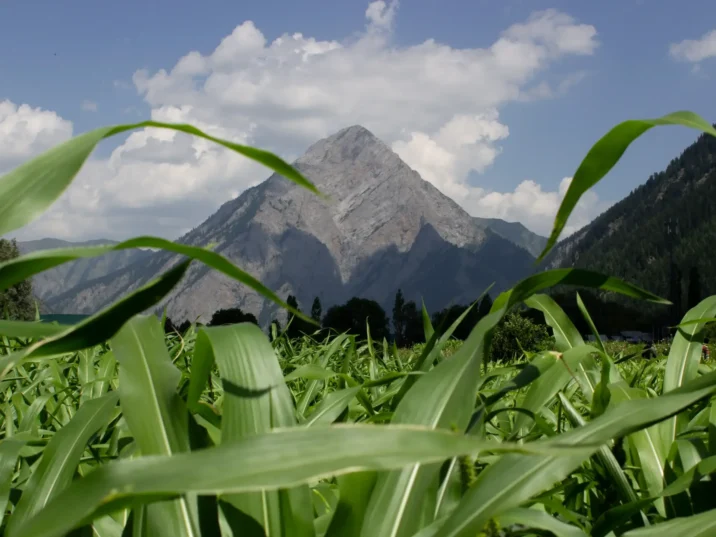
Hidden Kashmir: Where Time Still Moves Slowly
Beyond Dal Lake, beyond the gondola queues and the houseboat brochures, lies a Kashmir that does not know it is being searched for — valleys that exist quietly beyond the usual travel maps, where the road itself becomes the destination.
Beyond the Map: The Hidden Kashmir That Waits Quietly
Kashmir has always been described through its famous landscapes — Dal Lake’s calm waters, Gulmarg’s snow-covered slopes, Pahalgam’s scenic charm. But beyond these well-known destinations lies another Kashmir — quieter, deeper, and almost untouched by the rush of modern tourism.
This is the Kashmir of forgotten roads, remote villages, hidden meadows and communities that still live close to nature. It is the Kashmir that travel writers like Javid Amin — who have walked these valleys long before they appeared in any tourism brochure — have been telling us about for years. The Kashmir where the only sounds are the breeze, birds and the movement of streams. Where tea is offered by strangers not because it is their job but because it is their nature.
Leaving behind Srinagar’s busy streets and the familiar tourist routes, a journey into hidden Kashmir is not towards the valley everyone knows, but towards the valleys that exist quietly beyond the usual travel maps. Here, the road itself becomes the destination — every turn a meadow, every halt a conversation, every cup of noon chai with a mountain shepherd a story worth carrying home.
In 2026, with improved road access, growing community-based tourism infrastructure, and a careful relaxation of permit requirements in several formerly restricted areas, the timing to explore hidden Kashmir has never been better. JKL Travels has been quietly taking the right kind of traveller to these places for years — and this guide is the most complete account of what you will find when you go.
Travellers who have done Dal Lake and want what comes after it. Those who measure a journey by depth rather than distance covered. Slow travel advocates, photographers, writers, and anyone who finds the standard Kashmir tour slightly too pre-arranged. This guide is for you.
Six Valleys. One Truth: Kashmir Is More Than Its Postcards.
Each of these valleys has been overlooked by an industry trained to route travellers to the easiest, most commercially convenient destinations. That is precisely why they still offer something the famous circuit cannot: the experience of arriving somewhere that has not yet been arranged for your arrival.
Hidden in the northern reaches of Kashmir, Bangus Valley feels like a world separated from time. Endless green meadows, flowing streams and mountain landscapes create a wilderness experience where the only sounds are the breeze, birds and the movement of nature. No crowded markets. No luxury resorts. Just raw beauty — and silence that feels like a luxury in itself. For photographers, trekkers and travellers seeking solitude, Bangus represents a different side of Kashmir entirely.
Known as the “Land of Love and Beauty” and “the fruit bowl of Jammu & Kashmir,” Lolab is an oval-shaped sub-valley 26 km long at 5,420 feet in the Kupwara district. Dense deodar and pine forests, apple and walnut orchards, apricot and peach trees, the Lahwal River flowing west through the valley’s heart, and the mysterious Kalaroos Caves. The poet Muhammad Iqbal was inspired by Lolab enough to write a poem in its honour. The valley is divided into three sub-valleys — Potnai, Brunai, and Kalaroos — each with its own distinct character.
Deep inside southern Kashmir, Chatpal remains one of the region’s most peaceful escapes. The valley is surrounded by forests and orchards, traditional wooden houses blending naturally into the landscape. Life here follows a slower rhythm — villagers continue farming traditions, maintain close community bonds and live according to seasonal cycles that have shaped generations. Unlike commercial tourist destinations, Chatpal offers travellers the opportunity to experience village life — not just observe scenery.
Crossing the dramatic Razdan Pass (3,300 m) feels like entering another world. Beyond the mountains lies Gurez Valley, home to the Dard-Shin community whose traditions, language and lifestyle reflect centuries of Himalayan heritage. Surrounded by snow-covered peaks and the Kishanganga River, Gurez is not just a scenic destination — it is a cultural experience. Habba Khatoon Peak, named after Kashmir’s most celebrated medieval poet, watches over the main settlement at Dawar. The valley can only be reached May–October.
Once restricted due to its use as an Indian Army artillery firing range — which inadvertently preserved it from commercial development — Tosa Maidan has gradually emerged as one of Kashmir’s most striking new tourism destinations. Spread across vast green sub-alpine landscapes in the Budgam district, the meadow still carries the charm of a place recently introduced to travellers. No hotels, no souvenir stalls — just open meadow so large it takes twenty minutes to walk to its far edge.
While some hidden destinations require adventure and long journeys, Yusmarg (47 km from Srinagar) and Doodhpathri (55 km) provide easier access for travellers seeking peaceful nature experiences. Pine forests, rolling grasslands, mountain streams, open picnic areas — and in Doodhpathri’s case, the milky-white glacial streams that gave it its name (“Valley of Milk”). Short walks, photography sessions and relaxed evenings make them ideal for visitors wanting Kashmir’s beauty without the crowds.
Gurez: A Story to Experience, Not Just a Place to Visit
Beyond the mountains, across the Razdan Pass at 3,300 metres, lies a valley that has been home to the Dard-Shin community for centuries — a people with their own language, architecture, and way of living that has survived largely unchanged because the mountain that guards them also sheltered them from outside influence.
The Razdan Pass and What Lies Beyond
The drive from Bandipora over Razdan Pass to Gurez is, in itself, one of the finest mountain journeys in Kashmir — switchbacks above the snowline, views into three river systems, and the distinct sensation of the valley and its noise dropping away behind you as the road climbs. Allow four to five hours from Srinagar, departing no later than 6 a.m. to cross the pass during the safest daylight window.
Gurez Valley opens below the pass like a secret kept by the mountains — the Kishanganga River bright and clear through the valley floor, Habba Khatoon Peak rising behind Dawar town, wooden Dard-Shin homes clustered along the riverbanks. The silences here are different from other silences. They carry the weight of proximity — to the Line of Control, to centuries of isolation, to a way of life that has had no reason to modernise because everything it needed was already here.
The Dard-Shin Community
The Dard-Shin people of Gurez are among Kashmir’s most ethnically and linguistically distinct communities. Their language, Shina — an ancient Dardic Indo-Aryan language — is spoken by approximately 100,000 people across the border regions of Kashmir and Gilgit-Baltistan. Their traditional architecture (wooden construction with decorative carving that differs markedly from mainstream Kashmiri styles), their embroidered textiles, and their community practices have been preserved by the valley’s historical inaccessibility in ways that no museum can replicate.
JKL Travels arranges community interaction visits as part of the Gurez itinerary — a meal with a local family, a conversation with a Shina speaker about the valley’s history, and a walk through Dawar’s riverside settlement with a Gurez-born guide. These are not curated experiences. They are simply what happens when you arrive in a place that has not yet learned to perform itself for visitors.
The Tulail Valley Drive and Chakwali
From Dawar, the road continues along the Kishanganga to Tulail — rated by those who have driven it as one of the most beautiful valley roads in all of Kashmir. The river runs beside the road, the peaks narrow above, and the occasional village appears between orchards and pastures. The road ends at Chakwali, the last civilian-accessible point before the Line of Control. Photography of military installations is strictly prohibited; the landscape itself, however, is extraordinary and entirely photographable.
Indian nationals: register at checkposts with government ID (Aadhaar/DL/Passport) — no special ILP generally required, but verify with District Administration Bandipora before travel. Foreign nationals: confirm permit requirements well in advance — rules have evolved significantly. No ATMs in Gurez — carry cash from Bandipora. BSNL network only. Road open May–October (Razdan Pass closes November–April). Pre-book government bungalow or homestay through JKL Travels — walk-in availability is not guaranteed.
In these forgotten corners of Kashmir, the true meaning of travel becomes clear — sometimes the most beautiful places are not the ones everyone knows, but the ones waiting quietly beyond the map.
Javid Amin · Hidden Kashmir
Drive the Kishanganga valley road from Dawar to Chakwali — consistently rated by those who know Gurez as one of the finest valley drives in Kashmir. The river runs beside the road the entire way.
JKL Travels arranges community visits with Dard-Shin families — a meal, a conversation, a walk through Dawar with a Gurez-born guide. The kind of experience no algorithm can design.
“The most unforgettable moments often happen between destinations — a roadside tea stall, a conversation with a shepherd, a village elder sharing stories of old trade routes.”
Lolab: The Valley Muhammad Iqbal Wrote a Poem For
When the philosopher-poet Muhammad Iqbal visited Lolab Valley and was moved to write “O Valley of Lolab!” — a poem celebrating the valley’s springs, its morning birds, its quality of light — he was responding to something that 114 kilometres of road from Srinagar still delivers in 2026: a landscape of exceptional, intimate beauty that rewards slow attention.
What Lolab Actually Looks Like
Lolab is an oval-shaped basin 26 km long and 5 km wide at 5,420 feet in the Kupwara district. It is divided into three sub-valleys — Potnai, Brunai, and Kalaroos — each with a slightly different character but all sharing the same defining features: dense forests of deodar, pine, kair and fir; orchards of apple, cherry, peach, apricot and walnut that earned the valley its title as the “fruit bowl of Jammu & Kashmir”; and the Lahwal River running through the valley from east to west with the clarity of mountain spring water.
The Lahwal River carries seasonal moods — a rushing torrent in June when the snowmelt is at its peak, a gentler companion by August, reflecting the blue of the sky in September. Walking alongside it through the forest-edged meadows of Chandigam or the orchard lanes near Kalaroos is the kind of experience that defies being photographed — the light through the deodar canopy, the cold smell of the river, the sound of the water over stones. Some things insist on being felt rather than captured.
The Kalaroos Caves and Satbaran Rock
The Kalaroos Caves (also known as Qalinmarg caves) are a series of ancient caves with inscriptions and carvings of uncertain origin — believed by some to date to pre-Islamic Kashmir, by others to the medieval period. The seven engravings on the Satbaran Rock that resemble doors but have no known structural purpose have generated local legends and scholarly debate in equal measure. Walking to the caves through the Kalaroos forest — a 30–45 minute walk from the village — is as much about the journey through the trees as it is about the destination.
Slow Travel in Lolab: What It Actually Means
Lolab Valley represents the growing idea of slow travel not as a marketing concept but as a practical reality. Unlike the major tourist hubs where each day is structured around a checklist of sights, Lolab rewards the unstructured hour — an afternoon in an orchard with a local family during the apple harvest, a morning walk to Lavnag Spring (one of the valley’s ancient natural springs with crystal-clear three-foot-deep water), an evening conversation at the entrance gate where Anwar Shah Kashmiri’s memorial stands beside the river.
114 km from Srinagar via Sopore and Kupwara. Bus: 2.5–3 hours. Private taxi (recommended): 2.5 hours. The road passes through Sopore and Kupwara town before entering the valley. Accommodation: J&K Tourism bungalows in Chandigam and Kalaroos (pre-book), private guesthouses in Sogam (the valley headquarters), or homestays with local families. Carry cash — banking facilities are primarily in Kupwara town.
Ancient caves with carvings of uncertain origin. The Satbaran Rock’s seven door-like engravings have no known explanation. Walk through Kalaroos forest (30–45 min) to reach them — the forest is as memorable as the destination.
Ancient natural springs maintained by the government. Lavnag — three feet deep, crystal clear. Gauri Spring nearby. Sacred and scenic; the kind of water that makes you understand why people built settlements here.
Apple, walnut, peach, apricot, cherry. Walking through Lolab’s orchards — especially during the August–September harvest — is a sensory experience that no urban traveller forgets easily. Ask a local family if you can help for an hour.
The Meadows That Exist Quietly Beyond the Tourist Map
Kashmir’s hidden meadows are not unmarked on every map — they have simply been absent from every itinerary. Each one offers a version of the valley’s natural beauty at a scale and silence that the famous destinations ceased to provide years ago.
Chatpal: A Village Where Tradition Lives
About 90 km from Srinagar in the Shangus area of Anantnag, Chatpal is a forest hamlet of almost excessive beauty — dense deodar and pine, apple and walnut orchards, meadow clearings, Gujjar community settlements with their seasonal migration patterns between valley and high pasture. The distinction between Chatpal and the standard Kashmir tourist circuit is not merely scenic. It is experiential. A morning walk through the Chatpal forest at 6 a.m., when the mist is still in the trees and the Gujjar community is moving its flocks, is the kind of moment that cannot be purchased through any hospitality system.
Tosa Maidan: The Meadow That Waited
Once restricted due to its use as an army firing range — which paradoxically preserved it from commercialisation — Tosa Maidan has gradually emerged as one of Kashmir’s most striking new destinations. Spread across vast sub-alpine landscapes in the Budgam district of the Pir Panjal range, it carries the particular charm of a place recently introduced to travellers. No hotels. No vendors. No souvenir stalls. One of the largest sub-alpine meadows in Asia in an essentially undeveloped state. It is accessible by road from Budgam and as the endpoint of the Doodhpathri-Tosamaidan multi-day trek.
Yusmarg: Quiet Beauty Within Easy Reach
Just 47 km from Srinagar, Yusmarg is a pine-fringed meadow at 2,400 m that is beloved by Srinagar locals and largely overlooked by the tourist circuit. Pony rides to Sang-e-Safed and Nilnag Lake, forest walks, and the wide open meadow itself — green in summer, amber in autumn — make it an ideal half-day or full-day option for travellers who want altitude and meadow without the gondola queue. It is, in every practical sense, the easiest offbeat option in this guide.
Doodhpathri: The Valley of Milk
55 km from Srinagar in the Pir Panjal foothills, Doodhpathri takes its name from the milky-white glacial streams — the Shailganga and its tributaries — that run through its bowl-shaped meadow. The light in the early morning here, when the mist is still on the water and the meadow is empty of everyone except the occasional shepherd, is among the most beautiful in Kashmir. It is also the starting point of the Doodhpathri-Tosamaidan trek — six days, six high-altitude lakes, one of the finest meadow treks in Kashmir that most trekkers have never heard of.
Limited mobile connectivity (BSNL is most reliable). No ATMs outside district headquarters — carry cash. Accommodation ranges from basic government rest houses to family homestays (no hotels in most locations). Roads to Bangus and Chatpal require 4×4 vehicles. Food is local and simple — and usually the best thing you’ll eat. These conditions are not inconveniences. They are the experience.
Weak mobile signal, once seen as a limitation, has become one of hidden Kashmir’s strongest attractions. Travellers who arrive connected leave reconnected — to landscape, to people, to themselves. Every JKL Travels guide in these areas carries satellite communication for genuine emergencies, so you can disconnect with confidence.
Kashmir’s beauty does not exist only in its mountains and valleys. It lives in its people, traditions and everyday stories.
Javid Amin · Hidden Kashmir
“A cup of traditional noon chai while watching mountains change colours with the setting sun — this is the Hidden Kashmir that waits just beyond the map.”
The 7-Day Hidden Kashmir Circuit
One week. Seven offbeat destinations. From the old lanes of Srinagar’s Shehr-e-Khaas to Gurez Valley’s Dard-Shin villages — a complete journey through the Kashmir that exists quietly beyond every standard itinerary. Best: May to September, with a 4×4 vehicle and a JKL local guide throughout.
Gurez (Day 4–5) requires 4×4 vehicle and early morning departure. Bangus Valley requires 4×4 and forest track capability. Accommodation in Gurez must be pre-booked — JKL Travels handles this as part of all offbeat packages. Carry 3–4 days of cash from Srinagar before heading north. Inform family of your itinerary before entering areas with limited connectivity.
Fly into Srinagar. Check-in near Dal Lake or Old City. Afternoon: JKL Travels’ guided walk through Shehr-e-Khaas — Jamia Masjid (built 1402 CE, 378 deodar columns), Shah Hamdan Mosque (1395 CE), Jhelum bridge walk from Zaina Kadal to Habba Kadal, kandur bakery stop. Evening: noon chai and traditional wazwan dinner in the Old City. This is the Kashmir that exists before the tourist circuit was built. Overnight Srinagar.
Morning drive to Doodhpathri. Walk the bowl meadow, the milky Shailganga stream banks, upper pasture. Picnic lunch. Afternoon: drive to Yusmarg (47 km from Srinagar, pine-fringed meadow at 2,400 m). Evening pony ride to upper pasture. Return to Srinagar or overnight in Yusmarg guesthouse. The two easiest, most family-friendly offbeat options in this guide — done in a single day.
Drive via Sopore and Kupwara. Enter Lolab at the Anwar Shah Kashmiri memorial gate. Morning: Chandigam village walk, Lahwal River. Afternoon: Kalaroos sub-valley — Kalaroos Caves and Satbaran Rock (30–40 min walk through forest). Lavnag Spring. Orchard walk (apple/walnut/apricot). Evening: overnight in J&K Tourism bungalow (Chandigam or Kalaroos) or Sogam guesthouse. Muhammad Iqbal wrote a poem about this valley. Spend a day understanding why.
Early morning: return drive to Srinagar from Lolab (2.5 hrs). Brief rest. Depart for Gurez via Bandipora, over Razdan Pass (3,300 m) — allow 4–5 hours. Arrive Dawar by mid-afternoon. Register at checkpost (carry government ID). Explore Dawar town, Kishanganga riverbank, Habba Khatoon Peak viewpoint. Evening: community visit with Dard-Shin family (arranged by JKL Travels). Overnight Gurez: government bungalow or homestay. Pre-booked essential.
Full day in the valley. Drive the Kishanganga road to Tulail — one of the most beautiful valley drives in Kashmir. Continue to Chakwali (last civilian accessible point). Walk the village, photograph the landscape. Return to Dawar for afternoon Kishanganga riverside walk. Second overnight Gurez. Carry packed lunch — no restaurants in Tulail. This is the most remote day of the circuit. It is also the best.
Return drive from Gurez to Srinagar (start 6–7 a.m.). Brief rest/lunch in Srinagar. Afternoon: drive south via Anantnag to Chatpal (~90 km, ~2.5 hrs). Arrive late afternoon. Dense deodar and pine forest walk. Gujjar community — seasonal migration culture. Overnight: forest rest house or Gujjar family homestay. Chatpal after Gurez is the contrast that completes the Hidden Kashmir picture: the intimate forest hamlet after the wide mountain valley.
Morning: Chatpal forest walk. Drive via Budgam to Tosa Maidan (the vast sub-alpine meadow that waited decades behind army gates). Walk the open meadow — no hotels, no vendors, no arrangements. Just the scale of a Kashmir that tourism hasn’t touched. Return to Srinagar. Final noon chai in the Old City. Airport transfer. End of the hidden Kashmir circuit.
What the 7-Day Hidden Kashmir Circuit Actually Costs
All costs below are indicative for 2026 — 4×4 vehicle and local JKL guide throughout, guesthouse/bungalow/homestay accommodation, daily breakfast and dinner. Flights excluded. GST @5% additional.
| Component | 2 Persons | 4 Persons | 6 Persons | Notes |
|---|---|---|---|---|
| 4×4 Vehicle — 7 days (Bolero/Thar, driver) | ₹22,000 | ₹12,500 | ₹9,500 | Per person — biggest group saving |
| JKL Local Guide — 7 days, bilingual | ₹2,500 | ₹1,400 | ₹900 | Per person, shared cost |
| Accommodation — 7 nights (bungalow/guesthouse/homestay) | ₹3,200 | ₹2,800 | ₹2,600 | Twin sharing. Gurez options basic but authentic. |
| All meals (breakfast + dinner; lunches estimated) | ₹1,800 | ₹1,800 | ₹1,800 | Local Kashmiri food. Simple, fresh, excellent. |
| Sightseeing — entries, Old City walk guide, pony rides | ₹1,500 | ₹1,500 | ₹1,500 | Heritage walk guide included in JKL package |
| Checkpost registration documentation | ₹300 | ₹300 | ₹300 | Indian nationals. Foreigners: verify separately. |
| Miscellaneous (fuel surcharge, porterage, tips) | ₹700 | ₹600 | ₹550 | Per person estimate |
| Total Per Person — Land Package | ₹32,000 | ₹20,900 | ₹17,150 | Excl. flights & GST 5% |
| Srinagar flights return (Delhi) — add separately | ₹7,000–14,000 | ₹7,000–14,000 | ₹7,000–14,000 | Per person; book 6–8 weeks ahead |
| All-In Estimate (with Delhi flights) | ₹39,000–46,000 | ₹27,900–34,900 | ₹24,150–31,150 | Per person. Book early for best fares. |
Add-On Experiences
| Add-On | Duration | Cost Per Person | Includes |
|---|---|---|---|
| Doodhpathri–Tosamaidan Multi-Day Trek | 6 days | ₹16,000–22,000 | Guide, camping, meals, permits (6 lakes) |
| Bangus Valley Camping Extension | 2–3 days | ₹6,000–9,000 | Tent stay, 4×4, meals; Kupwara |
| Lolab Valley Orchard Immersion (harvest season) | Extra day | ₹2,500–4,000 | Extended Lolab stay with orchard family experience |
| Old City Heritage Walk (standalone) | Half-day | ₹800–1,200 | JKL certified local guide, chai included |
Groups of 6 reduce vehicle cost per person by ~57% compared to 2 persons — the single biggest saving available. Travel in June or September (shoulder months) for 15–20% lower accommodation costs vs. July–August peak. Carry packed lunch from Srinagar for the Gurez days (Tulail has no restaurants). Lolab homestays cost ₹500–800 per night and are the most authentic accommodation option.
Every Question Offbeat Kashmir Travellers Ask
Permits, safety, connectivity, accommodation, responsible tourism — straight answers from JKL Travels’ offbeat Kashmir ground team, updated for 2026.
As of 2026, Indian nationals generally do not require a special Inner Line Permit for Gurez Valley — a significant change from earlier years. You must register at multiple army and police checkposts between Bandipora and Dawar with a valid government photo ID (Aadhaar, driving licence, or passport). Some official sources still reference ILP requirements, so JKL Travels always recommends verifying the current position with the District Administration Bandipora or our Srinagar team before departure, as border-area regulations can change at short notice. Foreign nationals must confirm permit requirements well in advance — rules have evolved since 2025 and should not be assumed.
Yes, Lolab Valley is safe to visit and no special permit is currently required for Indian nationals. The valley is in the Kupwara district, which some travellers associate with proximity to the LoC — but the tourist circuit within Lolab (Chandigam, Kalaroos, Sogam) is fully civilian, safe, and welcoming. The Lolab-Bungus-Drangyari Development Authority (LBDDA) actively manages the area for responsible tourism. Standard security registrations apply at district entry points. JKL Travels’ guides handle all checkpost registration as part of the package.
May to October is the reliable window for all destinations in this guide. Gurez is accessible only when Razdan Pass is open (approximately May to October). Lolab’s peak season is April–October with best orchards in August–September (harvest). Doodhpathri and Tosamaidan are best June–September. Chatpal and Yusmarg work well May–October. The sweet spots for balancing access, scenery, and solitude: June (pre-peak, green meadows, full access) and September (post-peak, harvest season in Lolab, golden light throughout, lower accommodation costs).
Accommodation in Gurez is limited and must be pre-booked. The J&K Tourism government bungalow (tourist hut) in Dawar is the primary option — basic beds and simple meals. A growing number of family homestays now exist in Dawar and nearby villages; these offer home-cooked meals and the most authentic overnight experience in the valley. There are no conventional hotels. No ATMs — carry cash from Bandipora. BSNL mobile only. JKL Travels pre-books all Gurez accommodation as part of our offbeat packages; attempting to arrange independently is unreliable as options are not listed on standard booking platforms.
No. The approach to Bangus Valley involves forest tracks in the Kupwara district that require high ground clearance and 4-wheel drive, particularly after rain. A standard sedan or hatchback cannot manage the final section. JKL Travels provides Bolero or Thar vehicles for all packages including Bangus. Additionally, Bangus Valley has no hotels — you will need tent camping or access to a forest rest house, both of which JKL Travels arranges in advance.
Yes — fully and without qualification. The Shehr-e-Khaas (Old City) has been safe for visitors since 2019 with enhanced tourist police presence, CCTV coverage, and a growing number of independent travellers doing heritage walks. JKL Travels recommends a local guide for your first visit — not for safety but for depth. The stories in those lanes are not visible without someone to tell them. Avoid photography near security installations. Respect prayer times at mosques.
Tosa Maidan is one of the largest sub-alpine meadows in Asia, located in the Budgam district of the Pir Panjal range. It was used as an Indian Army artillery firing range for decades, which restricted civilian access and — paradoxically — preserved it from commercial tourism development. After the army vacated and decontamination processes were completed, it was opened to civilian tourism. It remains almost entirely undeveloped: no hotels, no vendors, no souvenir stalls. Accessible by road from Budgam and as the endpoint of the Doodhpathri-Tosamaidan trek.
The Dard-Shin (or Dard-Shina) people are among Kashmir’s oldest and most distinct communities, speaking Shina — an ancient Dardic language spoken by approximately 100,000 people across the Kashmir-Gilgit border region. Their wooden architecture, textiles, and community traditions have been preserved by the valley’s historical inaccessibility. Visiting with respect is absolutely appropriate and welcomed — the community is warm and hospitable. JKL Travels arranges community visits with local guides from Gurez itself. Standard courtesies: ask before photographing people, do not enter homes without invitation, carry small gifts for children if visiting a family.
Very limited. BSNL is the most reliable network across all offbeat Kashmir locations — functional in Gurez’s Dawar town, Kupwara, and along main highway routes, but patchy or absent in Lolab’s deeper sub-valleys, Chatpal, Bangus, and Tosamaidan. Carry a fully charged power bank (20,000 mAh minimum). No ATMs in Gurez or Chatpal — carry cash from Srinagar or Bandipora. Inform contacts of your itinerary before entering areas with limited connectivity. JKL Travels guides carry satellite communication equipment on all offbeat routes for genuine emergencies.
Because in hidden Kashmir, the journey between places is as rich as the places themselves. A roadside chai stall where the owner insists you try his saffron tea. A shepherd who stops your vehicle to move his flock across the road and stays to talk for twenty minutes. A village elder who, when you photograph his house, asks you to sit and tells you the name of every peak visible from his doorstep. These encounters don’t happen on curated tourist circuits because the pace is too fast and the route too structured. In the hidden valleys, the pace adjusts to the valley’s rhythm — and what happens in the spaces between destinations becomes the journey’s best content.
The standard Kashmir itinerary (Dal Lake, Gulmarg gondola, Pahalgam pony rides) covers destinations that are excellent but heavily commercialised and shared with hundreds of thousands of other visitors per season. This 7-day hidden circuit covers the Srinagar Old City (almost entirely tourist-free despite being extraordinary), Lolab Valley (fruit orchards and ancient caves, 114 km from Srinagar), Gurez (Dard-Shin culture, accessible only 5 months per year), Chatpal (pine forest hamlet with Gujjar community life), and Tosamaidan (a vast undeveloped meadow that didn’t exist as a tourist destination 10 years ago). The landscapes are equally extraordinary; the experience is incomparably more personal.
We recommend it for return visitors or for first-timers who are experienced independent travellers comfortable with basic accommodation, limited connectivity, and flexible itineraries. For first-timers who want an offbeat element in an otherwise standard trip, JKL Travels designs hybrid itineraries — two days in Srinagar (including Old City), two days in standard Kashmir (Gulmarg, Pahalgam), and two to three days in one offbeat destination. Lolab Valley or Yusmarg + Doodhpathri + Chatpal are the most accessible offbeat additions to a standard Kashmir trip.
Javid Amin’s piece raises this directly: the growing interest in offbeat destinations creates opportunities for local communities but protecting these places is equally important. Responsible tourism in hidden Kashmir means: booking homestays directly through local hosts or JKL Travels (not through platforms that extract revenue from the community); hiring local guides from within the valley, not from Srinagar; carrying no single-use plastic into the meadows and valleys; photographing with permission; and leaving no trace. JKL Travels’ offbeat packages are built on these principles — local guides, community homestays, zero plastic policy, and direct revenue to valley households.
Lolab Valley: accessible to foreign nationals without special permits as of 2026, standard visa rules applying. Gurez Valley: as of 2025, foreign tourists were permitted to visit without the previously required army permits — a significant change. However, border-area tourism regulations for foreign nationals in India can change at short notice. JKL Travels strongly recommends that all foreign nationals verify current requirements with the Ministry of Home Affairs and the District Administration Bandipora before booking. Photography near the LoC and military installations remains strictly prohibited for all nationalities.
Contact JKL Travels’ Srinagar team directly. Because accommodation in Gurez (4–6 rooms total in tourist-accessible options) is extremely limited, advance booking of 4–6 weeks is strongly recommended for June–September peak season. Our team handles all pre-bookings, permit verification, vehicle arrangement, and guide assignment. Packages can be fully customised — shorter circuits (4–5 days), single-destination deep dives, or offbeat extensions to a standard Kashmir itinerary. Contact: 📞 +91 88033 24365 | +91 97960 24365 · 📧 Sales@JKLTravels.com | Sales@KashmirTravels.in · 🌐 JKLTravels.com
The Hidden Kashmir
Is Waiting.
So Are We.
Lolab’s fruit orchards at harvest. Gurez’s Kishanganga at dawn. Chatpal’s pine forest in the morning mist. Tosa Maidan’s open sky. The road between them all. JKL Travels has been taking the right travellers to these places for years — let us take you there too.
