Romance & Spiritual Journeys: The Trending North India Travel Packages Everyone’s Booking in 2026
By: JKL Travels – KashmirTravels | July 2026
There’s a reason travel planners keep circling back to the same stretch of map — from the tulip terraces of Srinagar to the ice-cave shrine above Pahalgam, all the way down to the golden dome in Amritsar. North India is currently having a moment, and it’s a rare one: it’s pulling in honeymooners chasing snow-capped romance and pilgrims chasing something older and quieter, often in the very same week, on the very same highway.
Search data and booking trends through 2026 point to one clear story — couples want experiences, not just destinations, and pilgrims want comfort woven into their faith journeys. Whether it’s a candlelight dinner on a Dal Lake houseboat, a ring ceremony against the Patnitop ridgeline, or a Golden Temple sunrise walk to mark an anniversary, this region is quietly rewriting what a “trending package” looks like. And with Diwali (8 November 2026) and New Year’s Eve on the horizon, the festive booking rush has already begun.
Here’s a deep, on-ground look at where couples and devotees are heading this year — with realistic budgets, verified festival and yatra dates, and the small details that make each trip worth the money.
Kashmir: The Crown Jewel of Romance in 2026
If there’s one destination that refuses to lose its shine, it’s Kashmir. Search interest for Kashmir honeymoon packages consistently tops the charts among North Indian getaways, and travel operators say it’s not just about scenery anymore — it’s about curated, Instagram-worthy moments that double as memories.
Dal Lake Houseboats — Where Romance Floats A stay on a heritage houseboat, complete with a shikara ride at sunset and a private candlelight dinner on the water, remains the single most-requested Kashmir experience for newlyweds. Timing this alongside Srinagar’s spring bloom adds an extra layer of magic: the Indira Gandhi Memorial Tulip Garden — Asia’s largest tulip garden, spread across roughly 30 hectares on the foothills of the Zabarwan range — typically opens in mid-to-late March and stays in bloom through mid-April, drawing lakhs of visitors each season. The 2026 edition opened on 16 March with over 1.8 million tulip bulbs across 70-plus varieties, and peak bloom fell in the first week of April. If you’re planning ahead for the 2027 season, aim for early April and book flights the moment dates are announced — hotel rates in Srinagar can jump 20-30% during peak bloom week.
Gulmarg Gondola Rides — Adventure Wrapped in Romance For couples who want their honeymoon to have a pulse, Gulmarg delivers. The Gondola cable car — one of the highest in the world — lifts couples over pine forests into snow-covered meadows, making it a favourite for ski honeymoons and adrenaline-laced proposals alike.
Pahalgam Riverside Retreats — Slow Mornings, Fast Rivers Set along the Lidder River, Pahalgam suits couples who’d rather unwind than sightsee — think riverside breakfasts, pony rides through pine trails, and quiet evenings away from the crowds.
Sonmarg Glacier Treks — For the Adventure-First Couple Sonmarg, the “Meadow of Gold,” is where alpine camping and light glacier treks are drawing a newer, more adventure-driven honeymoon crowd — a sign that Kashmir tourism is diversifying beyond the classic houseboat-and-garden circuit.
💰 Budget Travel Kashmir: A 4-day Tulip Festival–season trip is currently trending in the ₹12,000–₹15,500 per person range for budget travellers — book at least 6-8 weeks early to lock in these rates before peak-season surge pricing kicks in.
Jammu: Where Pilgrimage Meets the Ring Ceremony
Not every North India trip is about scenery — for millions, it’s about faith. Searches for Vaishno Devi yatra packages consistently spike during the monsoon months, as families and solo devotees plan their trip to the cave shrine of Mata Vaishno Devi in the Trikuta Hills near Katra.
What’s newer, and genuinely interesting, is how Jammu’s hill stations are being folded into a different kind of celebration entirely.
Patnitop & Sanasar Ring Ceremonies — Alpine Vows Patnitop’s meadows and Sanasar’s pine-fringed bowl — best known until recently for paragliding — are increasingly being booked for intimate ring ceremonies and pre-wedding shoots. It’s a compact way to combine a spiritual yatra with a celebration, without the logistics of a full destination wedding.
💰 Pocket-Friendly Yatra: A 3-night Vaishno Devi + Patnitop combination package is trending around ₹25,000 per couple, with several operators running seasonal discounts tied to festival months — worth checking rates again closer to Diwali and the winter wedding season.
Amarnath Yatra: 2026’s Most Time-Sensitive Pilgrimage
Few Indian pilgrimages carry the same urgency as the Amarnath Yatra, and this year is no exception. According to the Shri Amarnath Ji Shrine Board (SASB), the official body governing the pilgrimage, the Amarnath Yatra 2026 is currently underway, running for 57 days from 3 July to 28 August 2026, and concluding on Raksha Bandhan with the arrival of the Chhari Mubarak at the holy cave. Advance registration reopened on the SASB portal from 3 July to 12 August 2026, with pilgrims required to carry a Compulsory Health Certificate (CHC) issued on or after 8 April 2026, along with valid photo ID and an RFID tracking card collected in Jammu or Srinagar before setting out.
The trek to the 3,888-metre cave shrine can be undertaken via the shorter, steeper Baltal route (roughly 14 km) or the longer, gentler Pahalgam route (46-48 km), and helicopter options are available for those who want to skip the trek but still receive Lord Shiva’s darshan at the naturally forming ice lingam.
💰 Budget Amarnath Trek: A 4-night guided yatra package with camps and meals is trending around ₹30,000 per pilgrim. Given the daily pilgrim cap and high monsoon-season demand, registering early — and keeping a weather buffer in your itinerary, since landslide and rainfall advisories are common in July-August — is strongly advised.
Ladakh: Where Adventure Proposes to Romance
Ladakh has quietly become India’s boldest destination-wedding frontier, and the numbers back it up — this cold desert is now attracting couples who want their vows to come with a story, not just a venue.
Leh & Nubra Adventure Honeymoons Bike trips across some of the world’s highest motorable passes, monastery visits at Thiksey and Diskit, and camel rides on the Nubra Valley’s sand dunes (yes, camels, at 10,000 feet) make this one of the most distinctive honeymoon circuits in the country.
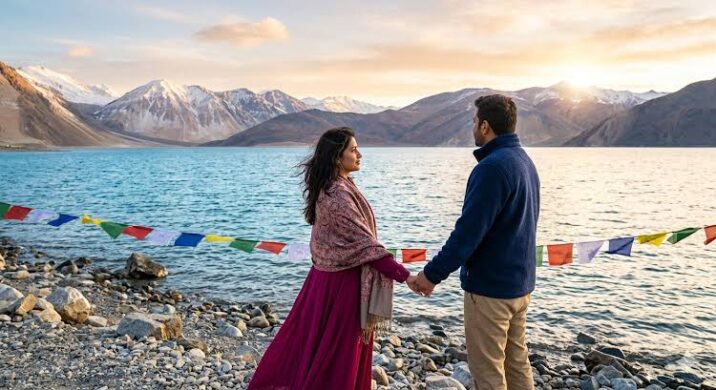
Pangong Lake Ceremonies — The Backdrop Everyone Wants Few settings compete with Pangong’s colour-shifting waters for a wedding photo, and couples are increasingly choosing it as the site for actual vows and small destination weddings, not just a photo stop.
Pocket-Friendly Ladakh Packages Eco-lodges and shared-tour formats are gaining real traction here, as budget-conscious couples look for ways to experience Ladakh’s high-altitude drama without the price tag of private luxury camps.
💰 Adventure Honeymoon Ladakh: A 6-night eco-lodge package is currently trending around ₹65,000 per couple, with early-bird bookings saving up to 20%. Given Ladakh’s short travel season (roughly May to September, before winter closures), booking 2-3 months ahead is non-negotiable.
Himachal Pradesh: The Classic Hill Honeymoon, Reinvented
For couples who want the hills without the altitude challenges of Ladakh or Kashmir’s political-season uncertainty, Himachal remains the reliable favourite — and it’s still growing.
Shimla — Colonial Charm, Boutique Comfort Searches for Shimla luxury honeymoon resorts stay strong year-round, driven by the town’s colonial-era architecture, mall-road walks, and a growing crop of boutique hillside properties built specifically around couple experiences.
Manali — For the Adrenaline Honeymooners River rafting on the Beas, trekking around Solang Valley, and skiing runs in the winter months make Manali the go-to for couples who’d rather bond over an adventure than a spa menu.
💰 Book Early Discounts Himachal: A 5-night Shimla–Manali honeymoon combo is trending at ₹40,000 per couple, with advance bookings saving up to 20% — particularly useful for couples planning around the Diwali travel window in November, when hill-station demand climbs sharply.
Punjab: Anniversary Trips With a Spiritual Core
Amritsar has carved out its own niche in this romance-meets-faith trend, and it makes sense — few places combine heritage, spirituality, and food culture as tightly as this Punjab city does.
Amritsar Golden Temple Anniversary Trips Couples are increasingly booking short anniversary getaways built around a sunrise or evening visit to the Golden Temple, paired with heritage walks through the old city, a stop at the Partition Museum, and the nightly Wagah Border retreat ceremony. It’s spiritual, it’s cultural, and it’s genuinely moving — a very different kind of anniversary trip. Diwali is a particularly striking time to visit, since Punjab’s own historical connection to the festival — marking Guru Hargobind Ji’s return to Amritsar — means the Golden Temple is lit with thousands of lamps and diyas, making it one of the most spectacular Diwali destinations in the country.
💰 Budget Amritsar Escape: A 2-night anniversary trip is trending around ₹18,000 per couple, with several operators layering in festive-season offers around Diwali and New Year.
Diwali & New Year 2026: The Festive Booking Window to Watch
This year’s Diwali falls on Sunday, 8 November 2026, with the five-day celebration running from 6 to 10 November — Dhanteras, Choti Diwali, Lakshmi Puja (the main day), Govardhan Puja, and Bhai Dooj. Amritsar’s Golden Temple and Jaipur’s illuminated bazaars are perennial favourites during this window, and North India’s hill stations — Shimla, Manali, and Patnitop — typically see a secondary surge in bookings right after Diwali, as families and couples extend the festive break into a hill getaway before winter fully sets in.
New Year’s Eve follows close behind, and Gulmarg, Manali, and Shimla routinely sell out their premium properties by early December. If you’re eyeing either the Diwali or New Year travel window for a Kashmir, Himachal, or Punjab trip, the general rule holds across every package listed here: book 6-10 weeks ahead, and you’ll typically save 15-25% compared to last-minute festive-season rates.
The Bigger Picture: Why This Trend Is Sticking
What ties Kashmir’s tulip terraces, Vaishno Devi’s cave shrine, Ladakh’s salt lakes, and Amritsar’s Golden Temple together isn’t geography — it’s intent. Travellers in 2026 aren’t choosing between romance and spirituality; they’re building itineraries that hold both. A couple might do a Vaishno Devi yatra and a Patnitop ring ceremony in the same week. A honeymooning pair might fold in a Golden Temple sunrise before heading to Manali. It’s a shift worth watching, and North India — with its rare mix of alpine drama, ancient shrines, and genuine warmth — is exactly the kind of place built to hold it.
Prices mentioned are indicative, sourced from current travel-operator trends, and may vary by season, group size, and hotel category. Always verify final costs, yatra registration windows, and travel advisories directly with the Shri Amarnath Ji Shrine Board (jksasb.nic.in), Shri Mata Vaishno Devi Shrine Board, and your chosen tour operator before booking.
