Kashmir in October & November 2026: Weather, Snow, Costs & Places | JKL Travels
By: JKL Travels – Kashmir Travels | September 2026
Kashmir changes dramatically between September and winter. Here is what October and November 2026 could look like, where to go, what to expect from snowfall, how much a Kashmir trip may cost, and how JKL Travels can help build the right itinerary.
There is a moment in Kashmir when the valley seems to change its personality.
The green of summer begins to fade. Chinar leaves turn gold, orange and crimson. The mornings acquire a sharper chill, while the mountains gradually begin wearing their first winter colours.
Then comes November.
The valley grows quieter and colder. Higher elevations begin preparing for winter, Gulmarg starts attracting the attention of snow seekers, and travellers begin asking the question that appears every year across search engines:
“Will it snow in Kashmir?”
That question is understandable. Kashmir is one of India’s most sought-after winter destinations, and images of snow-covered Gulmarg, frozen landscapes and white mountain peaks have become synonymous with a Himalayan holiday.
But there is another Kashmir that deserves attention.
It is the Kashmir of golden chinars, misty mornings, quiet shikara rides, mountain drives, houseboat stays, autumn photography and the first hints of winter.
That is the Kashmir this guide explores.
For travellers planning a Kashmir trip in October or November 2026, JKL Travels brings together the practical information that matters before booking—from destinations and weather to itinerary planning, indicative costs, houseboat stays and the reality of snowfall.
Because the smartest Kashmir holiday isn’t necessarily the one with the most sightseeing.
It is the one planned around the season, the traveller and the experience.
Why Kashmir Is Trending Beyond the Snow
Search interest around Kashmir has traditionally been dominated by phrases such as Kashmir tour packages, Gulmarg snowfall, Kashmir honeymoon packages, Dal Lake houseboats and best time to visit Kashmir.
But the travel conversation is becoming more seasonal.
Travellers are increasingly looking for answers to more specific questions:
Is October a good time to visit Kashmir?
What is Kashmir like in November?
When do the chinar trees turn red?
Can I see snow in Gulmarg in October?
How much does a Kashmir trip cost?
Is November cheaper than the summer season?
What should I pack for Kashmir in autumn?
These are valuable searches because they reveal something important: travellers are no longer looking only for a destination. They are trying to decide when to go, what they will actually experience and how much they should budget.
That creates an opportunity for a more useful kind of travel content.
Instead of promising a picture-perfect Kashmir on every date, this guide looks at what each seasonal window can realistically offer.
Kashmir in October 2026: The Month of Golden Chinars
October is when Kashmir’s autumn character becomes increasingly visible.
The valley begins moving away from the lush green appearance associated with summer, while the iconic chinar trees gradually transform the landscape with warmer colours.
Srinagar is particularly rewarding during this period.
Around Dal Lake, the Mughal gardens and the city’s historic areas, autumn creates a completely different visual atmosphere.
The combination of golden foliage, cool air, blue skies and Himalayan scenery gives October its own identity.
It is also an excellent period for travellers who want to explore Kashmir rather than make snowfall the sole purpose of the journey.
A typical October itinerary can combine:
- Srinagar sightseeing
- Dal Lake and shikara rides
- Houseboat stays
- Mughal gardens
- Gulmarg
- Pahalgam
- Sonamarg, subject to conditions
- Local cuisine
- Kashmiri handicrafts and shopping
Current 2026 travel guides similarly identify September–October as an autumn period associated with changing foliage, cooler weather and photography, while deeper winter is more strongly associated with snow and skiing.
The Chinar Question: When Does Kashmir Turn Golden?
If there is one visual experience that distinguishes autumn Kashmir from the usual summer and winter imagery, it is the changing chinar.
The large leaves gradually shift from green towards yellow, orange and deeper red tones as autumn progresses.
This means Kashmir in October is not exactly the same throughout the month.
Early October and late October can look noticeably different.
For photographers, this creates an interesting opportunity: instead of travelling only for snow, visitors can experience one of Kashmir’s most recognisable natural seasonal changes.
The Mughal gardens, Dal Lake surroundings and roads through the valley become particularly attractive locations for autumn photography.
And unlike a snowfall forecast, foliage does not require travellers to chase a particular storm.
Kashmir in November 2026: When Autumn Meets Winter
November is the bridge between two seasons.
The final autumn colours begin giving way to colder landscapes, particularly as the month progresses. Nights become significantly colder and higher elevations move closer to winter conditions.
This is where travel expectations matter.
A traveller looking for comfortable sightseeing and autumn photography may prefer October.
Someone attracted to cold weather, quieter surroundings and the possibility of early snow at higher elevations may find November more interesting.
Current local travel guidance describes November as a transition month, with late-autumn conditions early in the month and increasing winter influence later on.
But November should not be sold as a guaranteed snowfall month.
Snowfall is weather-dependent.
A trip scheduled for November does not automatically mean Srinagar, Pahalgam or Gulmarg will be covered in snow.
That distinction is particularly important when booking a package.
The right promise is an opportunity to experience winter—not a guarantee of snowfall.
Will It Snow in Kashmir in October or November?
This may be the most important question for winter-bound travellers.
The honest answer is:
It can, particularly at higher elevations, but no responsible travel company should guarantee snowfall for a specific date.
Gulmarg and other higher areas can experience early snowfall, but weather patterns vary from year to year.
The more reliable snow season is generally associated with the core winter months, particularly December through February, although actual conditions still vary.
Current Kashmir travel guides also distinguish autumn travel from the stronger winter snow season, with Gulmarg’s winter sports period generally concentrated in December–February.
So if snow is your number-one priority, plan accordingly.
If you are travelling in October or November, think of early snow as a bonus rather than a booking guarantee.
Gulmarg: The Kashmir Destination That Changes With the Weather
Few places demonstrate Kashmir’s seasonal personality better than Gulmarg.
During autumn, the landscape is about mountain views, cool weather and changing colours.
As winter develops, the destination begins taking on its famous snow-season identity.
Gulmarg is also home to the Gulmarg Gondola, one of the region’s most popular attractions.
However, travellers should remember that high-altitude activities and cable-car operations can be affected by weather, maintenance and local operating conditions.
The best approach is to check the latest status close to the travel date.
Planning Gulmarg by season
October:
Think autumn landscapes, mountain views and outdoor exploration.
November:
Expect colder conditions and increasing winter possibilities.
December–February:
The focus shifts towards snow, skiing and winter experiences, depending on actual snowfall.
This seasonal distinction makes Gulmarg particularly useful for a content strategy because the same destination answers several different traveller intents throughout the year.
Srinagar: Don’t Treat It as Just Your Arrival Point
One of the biggest mistakes first-time visitors make is treating Srinagar as merely the place where the airport happens to be.
It deserves time.
Dal Lake is the obvious starting point.
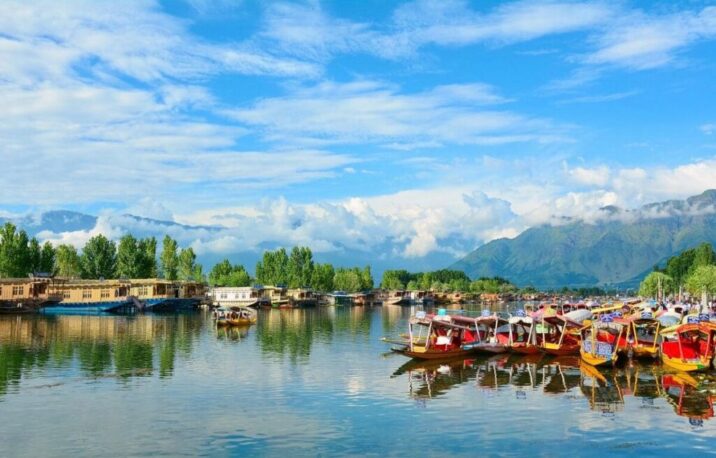
A shikara ride provides a different perspective of the city, with houseboats, floating gardens, mountain reflections and lakeside life forming part of the experience.
For travellers who want something more memorable than a standard hotel stay, a Dal Lake houseboat can be incorporated into the itinerary.
Then come the Mughal gardens.
Nishat Bagh, Shalimar Bagh and other historic gardens combine landscaped terraces, water channels and views towards the surrounding mountains.
In autumn, the surrounding foliage adds another layer to the experience.
The Houseboat Question: Hotel or Dal Lake Houseboat?
Why choose one when you can experience both?
For many first-time visitors, the best approach is a combination.
Spend most nights in a comfortable hotel and include one night on a houseboat.
That gives travellers the convenience of conventional accommodation while preserving one of Kashmir’s signature experiences.
Before booking a houseboat in colder months, however, ask about:
- Heating arrangements
- Room facilities
- Bathroom facilities
- Location
- Meal plan
- Transfer arrangements
- Check-in and check-out timing
The most attractive photograph does not necessarily tell you what the property will feel like on a cold November night.
That is why practical information matters.
Pahalgam: The Mountain Escape for Travellers Who Prefer Slow Travel
Pahalgam is where the Kashmir itinerary can slow down.
The Lidder Valley, surrounding mountains, forests and rivers create a landscape suited to travellers who enjoy scenic drives and relaxed exploration.
It is particularly popular among families and couples because the destination can be approached at a slower pace than a tightly scheduled sightseeing circuit.
For honeymoon travellers, Pahalgam also provides the opportunity to build a more private, scenic section into the itinerary.
For families, the key is avoiding unnecessarily long days.
For photographers, the attraction lies in the landscape itself.
For repeat visitors, Pahalgam can become the base for exploring beyond the standard tourist circuit.
Sonamarg: Beautiful, High and Seasonal
Sonamarg is another popular Kashmir excursion, but its high-altitude setting means travellers should think seasonally.
The landscape is dramatic, but accessibility and activities can change with weather and road conditions.
That makes Sonamarg particularly important when building an October or November itinerary.
Instead of promising a fixed experience months in advance, JKL Travels can adjust the day according to actual conditions closer to the journey.
This is one of the advantages of using a local travel planner.
A mountain itinerary should be responsive rather than rigid.
The Kashmir Nobody Puts on the Package Brochure
There is a tendency to reduce Kashmir to three destinations:
Srinagar. Gulmarg. Pahalgam.
They are important, but they are not the entire story.
A memorable Kashmir trip also includes:
Kashmiri food
Wazwan is an important part of Kashmir’s culinary heritage. Travellers should make time to experience authentic local cuisine rather than relying entirely on hotel menus.
Kashmiri handicrafts
Pashmina, papier-mâché, walnut woodwork and other crafts are closely associated with the region’s artistic traditions.
Old Srinagar
The historic city offers a different perspective from the lake-and-mountain imagery commonly associated with Kashmir.
Local markets
Shopping can become part of the cultural experience, especially when travellers take time to understand what they are buying and where it comes from.
Quiet mornings
Sometimes the best Kashmir experience is simply sitting beside the lake with a cup of tea while the mountains slowly emerge from the morning haze.
That does not fit neatly into a sightseeing checklist.
It is still worth travelling for.
Kashmir Trip Cost 2026: What Should You Budget?
The price of a Kashmir holiday varies considerably.
Travel dates, hotel category, vehicle type, number of travellers, meals, houseboat nights and optional activities can all affect the final price.
For planning purposes, a 5-night/6-day Kashmir land package in a 3-star category may broadly fall within the following range:
| Package Component | Indicative Range |
|---|---|
| 3-star accommodation | ₹7,000–₹10,000 pp |
| Breakfast & dinner | ₹3,500–₹5,000 pp |
| Local/private vehicle & transfers | ₹5,000–₹7,500 pp |
| Standard sightseeing/transport expenses | ₹1,000–₹2,000 pp |
| Indicative land-package range | ₹16,500–₹24,500 pp |
Practical planning figure
₹18,500–₹22,500 per person
for a 5N/6D trip based on twin sharing, 3-star accommodation, meals and standard sightseeing/transportation.
For two adults, this gives an indicative land-package budget of approximately:
₹37,000–₹45,000
Usually not included
Depending on the package:
- Flights
- Train tickets
- Gondola tickets
- Pony rides
- Adventure activities
- Entry tickets
- Personal shopping
- Lunches where not specified
- Travel insurance
- Expenses caused by weather-related changes
Important: These are planning estimates, not a fixed JKL Travels tariff. Final pricing should be obtained against the actual travel dates and inclusions.
JKL Travels’ current published Kashmir offerings demonstrate that prices vary significantly according to package type, duration and inclusions.
A Smarter 5 Nights / 6 Days Kashmir Itinerary
Instead of trying to squeeze every attraction into every day, JKL Travels can structure a balanced itinerary.
Day 1 — Welcome to Srinagar
Airport arrival and hotel transfer.
If time permits, enjoy an evening shikara ride on Dal Lake.
Overnight: Srinagar
Day 2 — Srinagar: Lakes, Gardens & Heritage
Explore Dal Lake, Mughal gardens and selected heritage attractions.
Keep the evening free for local food or shopping.
Overnight: Srinagar
Day 3 — Gulmarg
Drive to Gulmarg.
Enjoy the mountain landscape and, if operating and weather conditions permit, consider the Gondola.
Overnight: Srinagar/Gulmarg
Day 4 — Pahalgam
Travel towards Pahalgam and spend the day exploring the valley.
Avoid overloading the schedule.
Overnight: Pahalgam/Srinagar
Day 5 — Sonamarg or Flexible Srinagar Day
Visit Sonamarg if conditions permit.
If weather or road conditions make the excursion unsuitable, retain the day for Srinagar sightseeing, shopping, food and leisure.
Overnight: Srinagar
Day 6 — Departure
Breakfast and transfer to Srinagar Airport.
Kashmir for Every Traveller
The same destination can mean completely different things to different people.
Kashmir for couples
Think houseboat evenings, shikara rides, Gulmarg mountain views and a slower Pahalgam stay.
Kashmir for families
Prioritise comfortable hotels, shorter driving days and enough downtime.
Kashmir for senior travellers
Build a relaxed itinerary with fewer long road journeys and easy-access accommodation.
Kashmir for photographers
October’s changing chinars, Dal Lake mornings and mountain landscapes should be central to the itinerary.
Kashmir for snow seekers
Look towards the core winter months and remain flexible about actual snowfall.
Kashmir for budget travellers
Compare the total package cost rather than the headline hotel rate. Transportation and sightseeing can significantly alter the final amount.
What to Pack for Kashmir in October and November
A Kashmir holiday during the transition season requires sensible layering.
Pack:
- Warm jacket
- Sweater or fleece
- Thermals for colder dates
- Comfortable walking shoes
- Socks
- Sunglasses
- Sunscreen
- Umbrella or rain-resistant outer layer
- Personal medicines
- Power bank
- Gloves and cap for late autumn/winter travel
If Gulmarg or another higher-altitude destination is included, carry warmer clothing than you might need in Srinagar.
October vs November: Which One Should You Choose?
This is one of the most useful questions for travellers planning a Kashmir holiday.
| If you want… | Consider |
|---|---|
| Chinar colours | October |
| Comfortable autumn sightseeing | October |
| Photography | October–early November |
| Quiet travel | November |
| Colder weather | November |
| Early winter atmosphere | November |
| Higher chance of winter conditions | Late November onward |
| Snow-focused holiday | December–February, subject to snowfall |
There is no universal “best month.”
There is only the best month for your reason for travelling.
Is Kashmir Expensive in 2026?
Not necessarily.
Kashmir can be planned at several budget levels.
The final price depends on:
Hotel + transport + duration + travel date + sightseeing + activities.
A couple travelling on a 3-star plan may have very different costs from a family booking a premium hotel and private SUV.
Likewise, a traveller willing to travel outside peak dates may find different rates from someone travelling during a major holiday period.
This is why a transparent package quote is more useful than a generic “Kashmir from ₹X” headline.
Why Choose JKL Travels for Your Kashmir Holiday?
A Kashmir holiday involves moving through a mountain region where conditions can change.
That makes local planning valuable.
JKL Travels’ current Kashmir portfolio includes budget trips, Srinagar-Gulmarg-Pahalgam-Sonamarg itineraries, houseboat experiences and other Kashmir travel products. Its published material also positions the company around Kashmir-focused travel planning.
For travellers, the objective should be straightforward:
one itinerary, clear inclusions, sensible travel times and room for the destination to breathe.
JKL Travels can structure packages according to traveller type, budget, hotel preference and duration rather than forcing every visitor into exactly the same Kashmir experience.
That is particularly useful during autumn and winter, when weather can influence the practical side of a trip.
12 Questions Travellers Are Asking About Kashmir in 2026
Is October a good time to visit Kashmir?
Yes, particularly for travellers interested in autumn scenery, cooler weather and sightseeing rather than guaranteed snow.
What is Kashmir like in November?
November is colder and marks the transition from late autumn towards winter. Higher elevations may experience early winter conditions.
Does it snow in Gulmarg in October?
It can, but early snowfall is not guaranteed. Travellers should check the actual forecast and conditions close to departure.
When is the best time for snowfall in Kashmir?
December to February is generally the core winter period for snow-focused travel, particularly around Gulmarg, but snowfall varies by year.
Is Kashmir good for a honeymoon in October?
Yes. Couples can combine Srinagar, a houseboat stay, Gulmarg and Pahalgam in a relaxed itinerary.
How many days are enough for Kashmir?
Five nights and six days is a practical starting point for a first trip covering Srinagar, Gulmarg and Pahalgam.
How much does a Kashmir trip cost for a couple?
A tentative 5N/6D 3-star land package may be around ₹37,000–₹45,000 for two adults, depending on inclusions and dates. Flights and optional activities may cost extra.
Is a Kashmir houseboat stay worth it?
For first-time visitors, it can add a distinctive Dal Lake experience. A one-night houseboat stay combined with hotel accommodation is one practical option.
Is Kashmir safe for family holidays?
Travellers should check current official travel advisories and local conditions before departure. Once there, itineraries should also account for weather, road conditions and seasonal accessibility.
Can Kashmir be visited on a budget?
Yes. Accommodation category, travel dates, vehicle choice and group size have a significant impact on total cost.
Is November cheaper than peak summer?
Rates can vary by hotel, weekend, holiday and demand. November may offer different pricing from peak periods, but travellers should compare actual quotations rather than assume a fixed discount.
Can JKL Travels customise a Kashmir itinerary?
JKL Travels publishes multiple Kashmir travel formats and travellers can discuss dates, accommodation, transportation, destinations and activities when requesting a final itinerary and quotation.
The Real Kashmir Starts When You Stop Chasing the Postcard
Perhaps the biggest mistake travellers make is arriving in Kashmir with one photograph in mind.
Snow.
But Kashmir has never been just about snow.
It is the sound of a shikara moving across Dal Lake early in the morning.
It is the colour of a chinar leaf in October.
It is the first cold breeze on the road to Gulmarg.
It is Pahalgam when the valley is quiet.
It is a cup of kahwa after a long mountain drive.
It is a houseboat night when the lake becomes almost completely still.
And yes, sometimes it is the sudden excitement of waking up to fresh snow.
The trick is not to demand that Kashmir deliver the same picture every traveller has seen online.
The trick is to arrive in the season when Kashmir can tell you a different story.
Autumn in Kashmir. Winter in Paradise.
For October travellers, Kashmir offers colour.
For November travellers, it offers transition.
For winter travellers, it offers the possibility of snow.
For everyone, it offers a landscape that remains remarkably diverse even when the season changes.
And that is the idea behind JKL Travels’ approach to Kashmir:
Don’t simply book a destination. Plan the experience.
Choose your dates according to what you want to see.
Choose your accommodation according to how you want to travel.
Choose your itinerary according to how much time you actually have.
And leave enough space for the moments that no itinerary can predict.
This autumn, Kashmir is not waiting for winter. It is becoming it.
