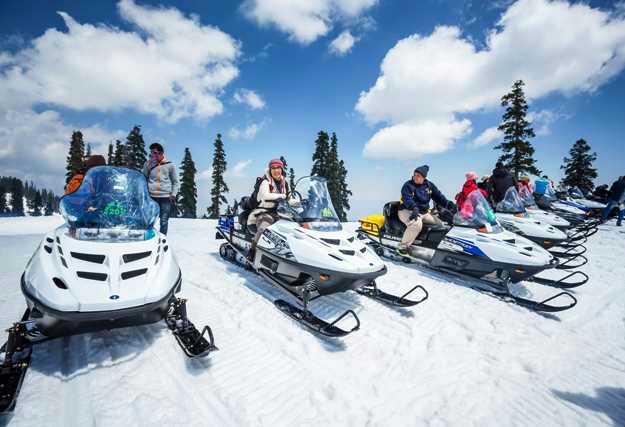
Gulmarg Stays King, But Kashmir’s Tourist Map Is Getting Bigger
By: JKL Travels – Kashmir Travels | February 2026
From a Single Crown Jewel to a Multi-Destination Circuit: How Kashmir Tourism Is Expanding Beyond Gulmarg
Fresh tourism data tabled in the Jammu and Kashmir Assembly has reaffirmed one clear fact — Gulmarg remains the Valley’s undisputed tourism heavyweight. Yet, beneath that headline lies a deeper transformation: Kashmir’s tourist geography is expanding.
While Gulmarg continues to draw the highest visitor numbers, several lesser-known destinations — once considered offbeat — are steadily moving into the mainstream travel circuit.
The shift marks an important structural evolution in Kashmir’s tourism model: from dependency on one flagship destination to a diversified, region-wide tourism ecosystem.
Gulmarg’s Enduring Dominance
There is little ambiguity about Gulmarg’s position.
Renowned for:
-
Skiing and snowboarding
-
The Gulmarg Gondola (one of the highest cable cars in the world)
-
Winter snow tourism
-
Meadow landscapes in summer
Gulmarg has consistently led visitor statistics over the years. Even during periods of overall decline in tourist arrivals, Gulmarg has shown relative resilience compared to other destinations.
Its brand strength comes from three core factors:
-
Global Ski Identity – Recognized as India’s premier winter sports hub
-
All-Season Appeal – Snow in winter, lush meadows in summer
-
High Visibility Promotion – Featured prominently in domestic travel marketing
For many domestic travelers, Kashmir equals Gulmarg.
But that equation is beginning to evolve.
Also Read | Pocket-Friendly Kashmir Fix Departure – 06 Days of Paradise (Jammu – Jammu) at Just Rs.13,500.00
Emerging Destinations Gaining Momentum
The Assembly data highlighted rising footfall in several destinations that were previously categorized as secondary or niche.
Among them:
-
Doodhpathri
-
Yusmarg
-
Gurez Valley
-
Bangus Valley
-
Kokernag
Each represents a distinct tourism proposition.
Doodhpathri
Often described as a quieter alternative to Gulmarg, Doodhpathri offers rolling green meadows, river streams, and less commercial congestion.
Yusmarg
Known for alpine pastures and trekking routes, Yusmarg appeals to travelers seeking serenity rather than structured resort tourism.
Gurez Valley
Strategically located near the Line of Control, Gurez combines dramatic mountain landscapes with strong cultural identity. Improved road connectivity has played a major role in increasing visitor access.
Bangus Valley
Positioned as an eco-tourism frontier, Bangus remains relatively untouched, attracting nature enthusiasts and photographers.
Kokernag
Famous for its freshwater springs and garden landscapes, Kokernag has seen renewed interest following infrastructure upgrades.
What Is Driving the Expansion?
1. Infrastructure Improvements
Better road connectivity, mobile network expansion, and upgraded tourist facilities have reduced logistical barriers.
2. Policy Diversification Strategy
After the April 2025 Pahalgam terror attack led to widespread site closures, the government initiated a recalibration strategy. Beyond reopening previously closed sites, authorities added nine new tourist spots to widen the Valley’s tourism base.
The objective: reduce over-reliance on a handful of destinations.
3. Changing Traveler Preferences
Modern travelers increasingly seek:
-
Less crowded destinations
-
Authentic rural experiences
-
Eco-tourism
-
Cultural immersion
Emerging spots meet these expectations.
Tourism Rebound in 2026
Following a sharp slump in 2025, tourism numbers have rebounded significantly in 2026. While Gulmarg continues to record the highest footfall, the proportional growth rate in emerging destinations has been notable.
This indicates not just recovery — but redistribution.
Instead of funneling visitors into one cluster, Kashmir is witnessing a broader spatial spread of tourist movement.
Why Diversification Matters
Economic Distribution
When tourism spreads geographically:
-
Rural guesthouses benefit
-
Local transport operators gain routes
-
Artisans in peripheral districts see demand
-
Small eateries and homestays grow
Diversification reduces economic concentration.
Reduced Ecological Pressure
Over-tourism in Gulmarg has periodically raised sustainability concerns. Expanding the tourism map:
-
Lowers seasonal congestion
-
Protects meadow ecosystems
-
Balances carrying capacity
Risk Mitigation
Overdependence on one destination increases vulnerability. A multi-destination circuit creates structural resilience against disruptions.
Also Read | Kashmir Delight Valentine Tour Package 4N 5D | Romantic Kashmir Getaway for Couples [@ 23450 – Per Couple]
Cultural and Experiential Shift
Emerging destinations are not simply geographic alternatives — they offer experiential differentiation.
-
Gurez introduces visitors to Dard-Shina culture.
-
Bangus promotes raw, untouched landscapes.
-
Yusmarg caters to trekkers and slow travelers.
-
Kokernag blends gardens with heritage ambiance.
Kashmir’s tourism identity is gradually moving beyond snow tourism and postcard imagery.
From Crown Jewel to Crown Network
The evolution can be described in stages:
Phase 1: Gulmarg-centric tourism
Phase 2: Srinagar–Pahalgam–Gulmarg triangle
Phase 3 (Emerging): Valley-wide circuit model
The government’s diversification push suggests a deliberate transition toward Phase 3.
Strategic Implications
If sustained:
-
Kashmir could reduce seasonality fluctuations.
-
Rural employment could stabilize.
-
Domestic tourism may expand beyond peak snow months.
-
Eco-tourism frameworks could gain policy backing.
However, challenges remain:
-
Ensuring sustainable infrastructure
-
Avoiding unregulated commercialization
-
Maintaining security confidence
-
Protecting fragile ecosystems
Also Read | Tulip Festival Srinagar 2026: Dates, Tickets & Spring Tours in Kashmir
The Bigger Picture
Gulmarg’s dominance remains intact — and likely will for years. But the story of Kashmir tourism in 2026 is no longer singular.
It is plural.
The Valley is transitioning from a “one-icon destination” to a layered tourism landscape where travelers can curate varied experiences within a single region.
If managed responsibly, this expansion could mark one of the most significant structural shifts in Kashmir’s travel economy in decades.
